Program
2026 05 22
- mdw
- Anton-von-Webern-Platz 1, 1030 Wien
- Bankettsaal
- 09:00am – 10:00am
- paper session #3
- James Saunders | Trying to keep up: managing cognitive load in audio scores
- Katharina Pollack, Piotr Majdak and Barbara Maria Neu | Experiment Design for Psychoacoustic Analyses of Audio-Score Compositions
- details
Trying to keep up: managing cognitive load in audio scores
James Saunders | Open Scores Lab, Bath Spa University
This paper examines how cognitive load theory can inform the design of audio scores that deliberately create unstable performance situations. Audio scores present temporal information that may be unknown in advance and which constantly disappears, creating unique cognitive demands compared to static visual notation. Drawing on cognitive load theory from instructional design, I identify how intrinsic, extraneous, and germane cognitive load—alongside specific effects including split-attention, modality, transient information, and task switching—shape performer responses to dense streams of verbal instruction. Unlike instructional design, which aims to reduce extraneous cognitive load to optimize learning, my compositional approach deliberately manipulates these parameters to create productive difficulty. Through discussion of two recent pieces I consider how varying the density, simultaneity, and sequentiality of verbal cues generates distinct performance conditions. The discussion explores how player control over pacing fundamentally alters the way cognitive load manifests, shifting from individual overwhelm to distributed decision-making. For composers working with audio scores, this suggests practical strategies: manipulating verbal instruction parameters provides direct control over extraneous load while keeping individual task complexity low, and incorporating repeated instructional patterns helps players develop response schema.
© Rebecca Saunders
James Saunders
James Saunders is a composer with an interest in group behaviours and decision making. He performs in the duo Parkinson Saunders. He runs the Open Scores Lab at Bath Spa University, where he is Professor of Music.
james-saunders.comExperiment Design for Psychoacoustic Analyses of Audio-Score Compositions
Katharina Pollack | Acoustics Research Institute, Academy of Sciences, Vienna
Piotr Majdak | Acoustics Research Institute, Academy of Sciences, Vienna
Barbara Maria Neu | University of Music and Performing Arts, Vienna
Psychoacoustics and the perception of sound play a crucial role in the process of composing a musical piece. The interpretation by the musician, despite a-priori knowledge about the musical piece, and, if applicable, the interaction between the musician and the composer in a live scenario, both heavily depend on their auditory systems and auditory environment. To better understand the underlying psychoacoustic processes, we conducted an experiment using isolated parts of audio-score recordings of a clarinet. In the experiment, we focused on perceptive parameters involved in the musical piece. We relate our findings to existing psychoacoustic models, considering the limits of the models’ auditory stages and the possibility of incorporating the models in the process of audio-score compositions. To this end, we give an outlook on what a psychoacoustic analysis of audio-score compositions could look like.
- 10:00am – 11:00am
- paper session #4
- Ming Yang | Composing the Ears of the Machine: Audio Scores, Selective Listening, and Concatenative AI Improvisation
- Sandeep Bhagwati and Kasey Pocius | Generative Audioscores as Engines of Social Choreography in Villanelles de Voyelles II
- details
Composing the Ears of the Machine: Audio Scores, Selective Listening, and Concatenative AI Improvisation
Ming Yang | Royal Northern College of Music
This paper proposes an expanded notion of audio score for AI-mediated improvisation, grounded in psychoacoustic theory and practice-based composition. Building on Louis d’Heudière’s account of audio scoring with verbal instructions and field recordings, it shifts the focus toward sound without instruction as score: sound that guides performers through selective listening. Drawing on auditory scene analysis and timbre perception, the paper argues that sound can function as a score because listeners extract perceptual dimensions such as brightness, roughness, envelope, and tonal stability and treat them as cues for musical action. It then extends this framework to machine listening, treating corpus-based concatenative systems as computational analogues of selective, feature-based listening, in which descriptors, weights, and distance models define how the machine “hears” and which aspects of the input acquire prescriptive force. A case study of Overlapping for alto saxophone and live electronics examines how this idea is realized through two contrasting corpora, three designed saxophone sound types, and three microphones functioning as independent “ears,” creating a looping audio score shared by human and algorithmic agents. The paper concludes by discussing the limitations of descriptor-based listening— its partial view of the sound object—and argues for composing with multiple, parallel listening modes as a way of articulating richer audio scores between humans and machines.
© Ming Yang
Ming Yang
Ming Yang is a UK-based composer, sound artist and researcher originally from China. Educated in both the United States and the United Kingdom, his practice spans electroacoustic and instrumental composition, sonic art, music technology, and improvisation, with a particular focus on multimedia work and human–AI interaction in music. His creative and research interests centre on sound as a dynamic, interactive system, exploring how musical gestures, machine listening, and algorithmic processes can shape real-time composition and performance. Through this work, Yang investigates how AI may function not merely as a reactive tool but as an active musical agent in improvisation and electroacoustic composition. Yang's music has been performed by ensembles and presented at festivals across the United Kingdom, United States, China, and Mexico. Alongside his concert works, he is deeply engaged in sound installation and spatial audio, with works exhibited in Huddersfield and London that examine perception and space through sonic experience. He is currently pursuing a PhD at the Royal Northern College of Music (RNCM), where his research focuses on electroacoustic composition, AI-driven improvisation, and multimedia performance systems.
Generative Audioscores as Engines of Social Choreography in Villanelles de Voyelles II
Sandeep Bhagwati and Kasey Pocius | Concordia University Montréal
This paper analysis an instance of a generative audioscore through an analysis of “Villanelles de Voyelles II” (2022), a non-linear audio-based score system. Building on earlier work on Elaborate Audio Scores, the paper argues that this piece represents a qualitative shift from audio scores as conveyance mechanisms toward procedurally composed dramaturgical systems. Musical form emerges from a constrained generative architecture combining weighted instruction sets, elastic temporal distributions, relational pitch logic, and periodic system-wide interventions. Beyond sonic and temporal organisation, the paper foregrounds the affordances of generative audioscores for spatial movement and emergent theatricality. By encoding relations of attention, proximity, and response rather than choreographic gestures, the audioscore enables performers to enact socially legible behaviours without representational intent. The paper situates generative audioscores as notational systems that compose sound, time, space, and social interaction.
© Tommy Davis
Kasey Pocius
Originally from St. John's (Newfoundland), Kasey Pocius is a gender-fluid intermedia artist based in Montréal. Trained in viola and piano, they create live multimedia and electronic performances exploring multichannel spatialization, improvisation, and gestural interaction with digital musical instruments (DMIs). As an associate researcher at the GRMS, CIRMMT, and IDMIL laboratories, Kasey presents work at international festivals across Europe, the Americas, Oceania, and Asia — including ICMC, Ars Electronica, NYCEMF, BEAST FEaST, Sonorities, and Burning Man.
- 11:00am – 12:00pm
- paper session #5
- Barbara Neu | Interpreting Audio Scores
- Jonas Sjøvaag | Playing the Room: Tapeplayer and the Improvised Audio Score
- details
Interpreting Audio Scores: Experiences and Insights
Barbara Maria Neu | University of Music and Performing Arts, Vienna
This paper provides a resuming insight into my experiences of interpreting audio scores as a clarinetist. It draws on moments from my experience that began with my first encounter with audio scores and have since continued through sustained and intensive engagement within the framework of a research project about audio scores. The experiences from the initial Encounter with an audio score through to the Performance are described from the perspective of a clarinetist trained in the classical music tradition, who has repeatedly engaged with contemporary music out of personal interest, without having completed any specialized training in this field. The interpretation of contemporary music, extended techniques and collaboration with composers, usually based on written scores, are therefore familiar to me. However, they do not constitute the everyday content of my work as a musician. The starting position of working with musicians, who are somehow familiar with contemporary music but do not work with it in their everyday life, is, in my view, one that composers in contemporary music frequently encounter and will continue to encounter and one for which audio scores can offer unexpected advantages and possibilities.
Playing the Room: Tapeplayer and the Improvised Audio Score
Jonas Sjøvaag | University of Agder, Norway
This paper presents TapePlayer, a tape echo simulator designed as a score-framework for improvising musicians. Drawing on the incommensurate loop techniques of Brian Eno's ambient works, Terry Riley's time-lag accumulators, and Alvin Lucier's room-as- instrument approach, TapePlayer provides a compositional infrastructure: four independent delay lines with configurable lengths, bidirectional playback heads, and—crucially—the acoustic room itself as primary feedback network. The score is not the sound that emerges but the framework that shapes it: system configuration, microphone placement, and spatial acoustics. The improviser activates this structure, generating material that the system transforms and returns. Rather than prescribing pitches or rhythms, TapePlayer establishes conditions for mimetic engagement—performers identify with, respond to, and transform their own sound as it returns altered by room and machine. I examine this relationship through the concept of mimesis as theorized by Paddison: not imitation-as-copying but embodied identification with sound. The paper discusses TapePlayer's technical architecture, its application as score-script for improvisation, and the psychoacoustic implications of a framework that never produces the same result twice. A video demonstration illustrates the mimetic relationship between performer, system, and space.
© Pierluca Taranta
Jonas Sjøvaag
Jonas Sjøvaag is a Norwegian musician, composer, and PhD candidate in Artistic Research at the University of Agder, where his dissertation examines musical identity and human-machine improvisation. He holds a Master in Performance (improvised music) from the Norwegian Academy of Music and his main instrument are drums. His practice spans drums, electronics, and custom software development – including TapePlayer, Drift Engine, and MusicHal_9001, systems designed for real-time improvisation with machine partners. He has released over 25 albums as leader or co-leader and operates Færder Audio recording studio and the Shipwreckords label. He is also a consultant in digital publishing for artistic research, having developed ECTS-accredited courses in Research Catalogue for institutions across Norway and Europe.
- 12:00pm – 01:30pm
- workshop #2 (Room DO263) and #3 (Room E0101) in parallel
- Sandeep Bhagwati #2 | Writing Spoken Instructions for Audioscores
- Andrea Agostini #3 | Multimodal Scores with bach
- details
Writing Spoken Instructions for Audioscores
This workshop focuses on audio scores that guide performers through spoken instructions delivered in real time. It addresses the compositional challenges of writing instructions that are heard while playing: instructions that must be concise, temporally situated, and immediately actionable. Participants explore how spoken instructions function as notation—orienting performers in time, regulating entrances and silences, shaping interaction, and conveying affect or relational intent without prescribing sound in detail. The workshop treats audio scores as performative, time-based notation systems rather than substitutes for visual scores. No instruments required.
Multimodal Scores with bach
Andrea Agostini
The aim of the workshop is to show how to utilise the bach extension to Max to realise multimodal and audio scores. During the workshop, a quick introduction to the bach system will be first given, with a special focus on the musical notation editors. Then, the specific mechanism of slots will be described and analysed. Slots, within the context of bach, are containers for arbitrary data that can be associated with events in a musical score. They can be used to control sound synthesis processes, to embed files of various kinds within the score, and more. At the outcome of the workshop, participants will be able to set up their own multimodal scores. For a fruitful experience, a working knowledge of Max is recommended. Participants are encouraged to bring their own laptops with a recent version of Max installed and, if possible, a pair of headphones.
© Andrea Agostini
Andrea Agostini
Andrea Agostini (born 1975) is a composer, researcher and educator in the field of computer music, with a specific focus on computer-aided composition. After earning his degrees in piano, composition and electronic music, he attended the two-year course in composition and musical informatics at IRCAM, Paris. His works of instrumental and electroacoustic music are regularly performed in the most important international festivals and venues. He is a founding member of /nu/thing, a collective of Italian composers. He has co-authored the software bach for computer-aided composition. He is full professor of computer music and electronic composition at the Conservatory ofTurin, and he regularly delivers workshops, presentations and masterclasses about his research and artistic work in the most important European and American institutions. He is currently undertaking his doctoral research at the University and Royal Conservatoire of Antwerp and Orpheus Institute Ghent.
break
- Bankettsaal
- 02:00pm – 03:00pm
- paper session #6
- Alex Hofmann and Sonja Stojak | Information embedment in Live-Electronics: Scores, Setups and Performer knowledge
- Rémy Jannelle and Nicolas Bernier | Towards a notation of sceno-electroacoustic works
- details
Information embedment in Live-Electronics: Scores, Setups and Performer knowledge
Alex Hofmann and Sonja Stojak | Department of Music Acoustics mdw – University of Music and Performing Arts Vienna
Works for live-electronic music performance depend on a substantial amount of information about the music itself but also about the required technical setups. This paper examines materials for two live-electronic interpretations of historic tape music repertoire and four original works for live-electronics, created by different live-electronic partitioners (LEPs) within the artistic research project “Études for live-electronics". Although written musical scores were not a requirement, for four of the works such scores were created. An analysis of the scores revealed different levels of information detail, depending on the relation of the LEP to the intended performance practice. Implications of access to the remaining information, often embedded in technical setups or retained as the performers’ background knowledge are discussed.
Keywords: Musical notation; Notation in electronic and electroacoustic music; Live-electronic music
© Stephan Polzer
Alex Hofmann
Alex Hofmann is a professor in music acoustics at mdw – University of Music and Performing Arts Vienna, sound artist and saxophone/live-electronics performer working with improvised and contemporary music. He has authored over 70 publications, including 3 editorial works
mdw.ac.at/alex-hofmann
© Oskar Gigele
Sonja Stojak
is a research coordinator at mdw – University of Music and Performing Arts Vienna and music theorist with publications including a book chapter, a conference proceedings article, a journal paper, and working experience in editorial work as well as at a music publisher house (Universal Edition).
Towards a notation of sceno-electroacoustic works
Rémy Jannelle and Nicolas Bernier | Université de Montréal - Laboratoire formes • ondes (LFO)
This article addresses theatricalized musical performances within contemporary artistic practices. It examines how these works can expand beyond instrumental execution to incorporate staging and scenography as integral components of performance. The study proposes an analysis of the score of a sceno-electroacoustic work, a mode of musical practice in which sound emerges from transformations of the scenic space itself. This article contributes to reflections on notation, performance, and the role of scenography in electroacoustic music.
© Kevin Delamour
Rémy Jannelle
Rémy Jannelle is an artist-researcher and composer currently pursuing a master’s degree in composition and sound creation at the Faculty of Music of the Université de Montréal. His research-creation focuses on live electroacoustic performance through scenographic manipulation. His work brings together music, staging, space and light within performative and installation-based contexts. He developed Oscillation I (2022), an installation, and Oscillation II (2023), a performance derived from the same scenic instrument. He also has developed the sceno-electroacoustic performances Expansion (2025) and Sémiographie (2026). His practice explores the interactions between scenography and musicality, approaching the stage environment as an instrument in itself. He is a member of the research collective Laboratoire formes • ondes.
© Isabelle Gardner
Nicolas Bernier
Nicolas Bernier is a professor of composition and sound art at the Faculty of Music of the Université de Montréal. His research-creation focuses on the performativity of electronic sound, a practice enriched by dialogues with artists from visual arts, dance, theatre, animation, and poetry. Directing Ensemble d’oscillateurs since 2016, he has actively contributed to the development of electronic music in ensembles. The ensemble explores approaches to score writing and performance techniques in electronic music. This ensemble project has led to the development of significant research-creation projects, notably on the aesthetics of the sine wave (2021-2024) and on performative notation (2024-2027). In 2020, he co-founded the research collective Laboratoire formes • ondes:
lfo-lab.ca- 03:00pm – 04:00pm
- paper session #7
- Peter Plessas | Realization score for digital sound composition
- Giuseppe Silvi | The Ragion Tropica Tactics: Inhabiting the Vibration, Audio Cartography, Sound Routes, and Other Useless Hacking Tools
- details
Realization score for digital sound composition
Peter Plessas | Department of Composition Studies and Music Production
University of Music and Performing Arts Vienna
The composition of electroacoustic music for the recorded medium has become largely independent from the requirement to furnish a realization score. While digital technology invites intuitive compositional work in graphical audiosoftware, a documentation of such creative activity often requires an a posteriori analysis and reverse-engineering approach. The iterative score presented here attempts to bridge the prescriptive and the descriptive nature of scores for sound compositions, that is musical works based on the transformation of recorded sound. Instructions for repeated realizations of an example composition are given, embracing a subtractive approach to problem solving with technology and providing a resource with good accessibility for visually impaired musicians.
© JJ Kucek
Peter Plessas
Trained in violin and guitar, Peter developed an early interest in studio composition and electronic music, writing and playing experimental music in addition to DJing. Following studies with Gerhard Eckel and Winfried Ritsch, Peter graduated in sound engineering from the University of Music and Performing Arts Graz. He established himself as live electronics musician, collaborating with Peter Ablinger, Gerd Kühr, Klaus Lang, Philippe Leroux, Olga Neuwirth, Klangforum Wien and musikFabrik Köln, amongst others.
Peter's compositions feature tape music, chamber music for DJs, spatial music and works for dance and theater. His artistic output is lined by research in digital instrument design and auditory perception. Peter has been a visiting scholar to UC Berkeley, McGill and Concordia Universities. He has taught at IEM Graz and is currently a senior lecturer for electroacoustic composition at Vienna University of Music and Performing Arts.
The Ragion Tropica Tactics: Inhabiting the Vibration, Audio Cartography, Sound Routes, and Other Useless Hacking Tools
Giuseppe Silvi | Conservatoire “A.Casella” of L’Aquila
Feedback-augmented instruments unveil unmapped sonic territory. Nevertheless, cartographic tactics can trace soundroutes that notation renders repeatable. This paper documents practices that emerged from augmenting an orchestral timpani with electromagnetic feedback: geometric spatial discretisation, exhaustive cataloguing of tridimensional samples, numerical analysis, and graph plots yield maps and performative notation. Each phase arose through sustained engagement with the instrument’s particular constraints—cataloguing revealed analytical needs, analysis suggested notational possibilities, notation exposed cataloguing gaps—a circular process termed ragion tropica (tropic reason), which operates through tactical circulation, guided by the material itself. The graphs that emerge from this circular process—where nodes represent catalogued sounds and edges encode timbral proximity in descriptor space—function as sound routes: performative trajectories through organised territory that the composer traces, producing frameworks and scores which preserve navigational flexibility, sustaining the performer’s agency within the very constraints that make compositional discourse possible.
© Marco Iacobucci
Giuseppe Silvi
Giuseppe Silvi is a professor of Electroacoustics at the Conservatory “N. Piccinni” of Bari and a doctoral researcher in Artistic Research in Music at the Conservatory “A. Casella” of L’Aquila. He studied Electronic Music at the Conservatory “S. Cecilia” in Rome with Giorgio Nottoli, Nicola Bernardini, and Michelangelo Lupone, and completed advanced studies with Alvise Vidolin (Ac-cademia Chigiana) and Michelangelo Lupone (Accademia Santa Cecilia). His research centres on the development of invented electroacoustic systems, including S.T.ONE, a tetrahedral omnidirectional loudspeaker, and Tempo (Timpani Electro-Magnetic Pulse Oscillation), a feedback-augmented timpani. He is the founder of LEAP (Laboratorio ElettroAcustico Permanente) in Rome and of the SEAM (Sustained ElectroAcoustic Music) project, dedicated to the interpretation of electroacoustic repertoire with particular attention to the Roman School tradition.
break
- 04:30pm – 05:30pm
- paper session #8
- Xavier Davenport | Mass-spring Lattice Physical Modeling Synthesis using a Quantum Algorithm
- Pedro González-Fernández, Thomas Noll and Reiko Yamada | Cricket Tools: Real-Time Audio Scoring of Quantum State Evolution Across Networked Mobile Devices
- details
Mass-spring Lattice Physical Modeling Synthesis using a Quantum Algorithm
Xavier Davenport | University of Illinois at Urbana-Champaign
In this paper I describe how a recently developed quantum algorithm for simulating the dynamics of mass–spring systems can be applied in the artistic context of physical modeling synthesis, and I propose a scalable “virtual microphone” method based on amplitude amplification for extracting perceptually relevant information from the simulated system. After outlining how to synthesize sound using a one-dimensional mass–spring system with both fixed and unfixed endpoints, I discuss the scalability and implications of this approach as quantum hardware develops. Potential applications of this theoretical framework include the simulation of imperfect vibrating systems and the large-scale modeling of systems containing up to on the order of 1029 coupled masses in a 100 qubit system.
© Jinjue Wang
Xavier Davenport
Xavier Davenport (b. 1995) is a composer and researcher working at the intersection of music, audio signal processing, and quantum computation. His work explores physical modeling synthesis, quantum algorithms for audio, and technologically mediated performance, including digital scores. He holds degrees in music, physics, and Chinese language & culture from Wittenberg University, an M.S. in electrophysics from National Chiao-Tung University, and an M.M. in composition from DePaul University. He recently completed a DMA in composition at the University of Illinois Urbana-Champaign.
Cricket Tools: Real-Time Audio Scoring of Quantum State Evolution Across Networked Mobile Devices
Pedro González-Fernández, Thomas Noll and Reiko Yamada | Escola Superior de Música de Catalunya, Barcelona
This paper presents Cricket Tools, a browser based client- server system for distributed, real-time audio scoring and synchronized audio playback across mobile devices (phones, tablets) connected to the same local network. Cricket Tools supports two complementary approaches: (1) synchronized fixed-media playback (e.g., multi-part stems) and (2) parameterized, real-time audio scores in which each performer’s device synthesizes an individualized audio guide. This second paradigm is designed for situations where the “score” is not a pre-rendered audio or video file but an evolving process controlled by a conductor or an interactive generative system. In the paper, we position Cricket Tools relative to prior work on audio and audiovisual scoring and distributed notation, drawing on Bhagwati’s framework of audio scores and on Schimana’s “sound as score” practice, as well as on Bell’s SmartVox/SmartBox lineage of web-based distributed parts for ensemble rehearsal and performance. We also describe the system’s architecture and timing approach, including a lightweight time-synchronization model and client-side scheduling for consistent playback across devices. As a use case, we outline a prototype in which features derived from quantum wavefunction evolution (magnitude/phase descriptors) are mapped to real-time audiovisual scoring parameters distributed to multiple players.
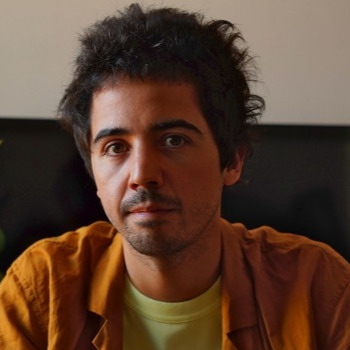
© Pedro González-Fernández
Pedro González-Fernández
Pedro González is a Spanish violinist, composer, and researcher specializing in intermedia art. His work has been presented at festivals and venues including the Internationales Musikfest Hamburg, SMC Conference, Centre National de Création Musicale, Resis Festival, Musica Festival, Manifeste, and Klangwerkstatt among others. Since 2021, he has been Professor of Contemporary Music and Multimedia at the Escola Superior de Música de Catalunya (ESMUC) in Barcelona. In 2023, he received a Fulbright Visiting Scholar grant for a research stay at CCRMA, Stanford University. He has also given seminars on multimedia at HfMT Hamburg and MHL Lübeck, and is active as a freelance composer and violinist in Spain and Northern Germany.
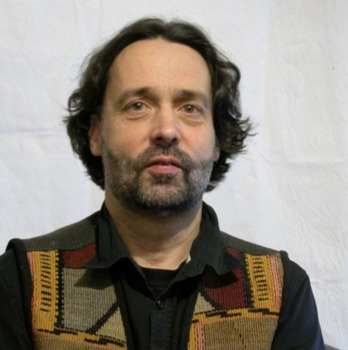
© Thomas Noll
Thomas Noll
Thomas Noll works in the field of mathematical music theory, where he published over 50 articles. Together with David Clampitt he received the 2013 SMT outstanding publication award for the MTO article “Modes, the Height-Width Duality, and Handchin’s Tone Character.” From 1998 - 2003 he was the leader of an interdisciplinary research group on mathematical and computational music theory. Since 2005 as a lecturer in music theory at the Esmuc in Barcelona. He was co-editor of the "Journal of Mathematics and Music“ and serves presently as the vice-president of the Society of Mathematics and Computation in Music.
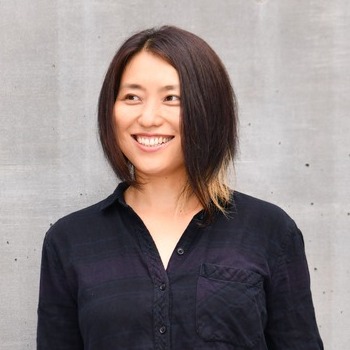
© Reiko Yamada
Reiko Yamada
Reiko Yamada is a composer and sound artist, originally from Hiroshima, Japan. She composes concert works, creates sound art installations, and works with interdisciplinary collaborators. Her work explores the aesthetic concept of imperfection in a variety of contexts. Yamada holds a D.Mus in composition from McGill University and is a recipient of numerous prestigious awards and fellowships. She was a 2015-16 Fellow at the Radcliffe Institute for Advanced Study of Harvard University, the 2016-17 artist-in-residence at IEM (Institut für Elektronische Musik und Akustik), the 2018 Innovator-in-Residence at Colorado College, 2020-21 S+T+ARTS resident artist, and composer-in-residency at Phonos Foundation. Her various projects have been commissioned and/or funded by New Music USA, the Canada Council for the Arts, IRCAM, CIRMMT, Armitage Gone! Dance, and the European Commission among others. Her works have been presented in venues such as The Metropolitan Museum Breuer (New York), and Sónar Festival (Barcelona). She is currently a postdoctoral researcher at ICFO (Institute for Photonic Sciences) and a professor of composition at ESMUC in Barcelona.
- 05:30pm – 06:30pm
- workshop #4 (Room A0201) and #5 (Room VZG48) in parallel
- Sonia Killmann and Simone Seales #4 | Collective Listening through Imagination Workshop
- Pierre-Luc Lecours and Nicolas Bernier #5 | SIGN/e - Integrated Animated Graphic Score Creation in Ableton Live Workshop
- details
Collective Listening through Imagination
Sonia Killmann and Simone Seales
This workshop is a participatory performance workshop that explores themes of collective listening and imagination. This workshop will be led in collaboration with cellist Simone Seales, who is an experienced workshop facilitator and educator based in Glasgow. We describe this as a “performance workshop” because the participants will perform with us selected Sonic Meditations by Pauline Oliveros alongside my own text scores.
The workshop is divided into three parts:
Part 1: Sonic exploration of space through collective listening and sonic meditations.
Part 2: Listening and Imagination through Field Recordings
Part 3: Dream Machine & Live Improvisation
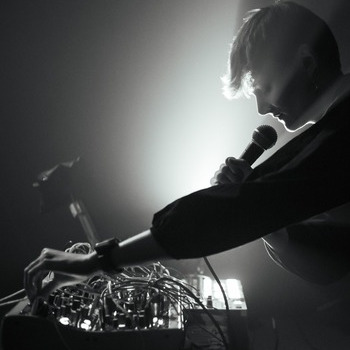
© Sonia Killmann
Sonia Killmann
Sonia Killmann is an Austrian-German saxophone player and electronic musician based in Ireland. As a PhD candidate at UCD (University College Dublin) Sonia Killmann’s research focuses on the use of mental imagery to create immersive performances. As an artist, Sonia explores different facets of this research through listening and field recording workshops. Sonia's work treads the boundaries between the familiar and the unfamiliar by merging organic and synthetic sound worlds. The composer creates spaces where sound becomes the overarching sensory experience in an otherwise visual world. Sonia has been exploring Pauline Oliveros’ Deep Listening concepts through circular breathing and adapting environments in the context of live performance. In 2025, both Sonia and Laura Mannelli won the Lumen Prize for their collaborative work UMWELTRAUM((A)) in the category Music & performance. The installation was developed in Cove Park and commissioned by Cryptic Glasgow and Kultur | lx.
© Simone Seales
Simone Seales
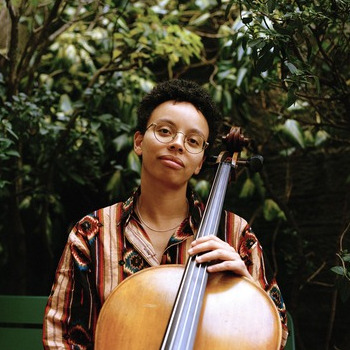
Originally from Florida, Simone Seales is a Glasgow-based cellist and performance artist working with free improvisation, live looping, poetry, and theatre.Their practice centres play, silliness, and connection, exploring sound as an embodiment of emotion. Their creative influences come from Black feminist leaders such as Audre Lorde, Assata Shakur and bell hooks. Within Simone's work, they centre Blackness, sexuality, intersectional feminism and anti-racism.They were commissioned by the 2025 Edinburgh International Book Festival to perform Dearest with Mele Broomes, ahead of the album’s debut release in November 2025. They are Musician in Residence with Paraorchestra, and have performed across the UK and internationally.
SIGN/e - Integrated Animated Graphic Score Creation in Ableton Live Workshop
Pierre-Luc Lecours and Nicolas Bernier
This workshop marks the official launch of SIGN/e (Symbol-based Interface for Graphic Notation Edition), a new set of Max for Live devices that transforms Ableton Live into a dedicated workstation for animated graphic notation. Unlike tools that require constant switching between external graphic design software and score readers, SIGN/e allows users to compose, edit, and animate scores directly within the DAW. The system’s modular architecture (Screen, Symbol, Text, Background Max for Live devices) gives composers and performers total parametric control over visual elements: position, scale, colour, and texture can be automated with Ableton Live automation system or modulated by control devices (LFOs) and audio signals in real-time. This workshop will demonstrate how SIGN/e bridges the gap between sound production and visual notation with the creation of dynamic scores by providing a technical demonstration, an explanation of its modular structure, and practical examples of use for composition and performance.
© Isabelle Gardner
Nicolas Bernier
Nicolas Bernier is interested in the performance of electronic music, sound installations, musique concrète, live electronics, post-rock, noise improvisation, and video art, while also working with dance, theater, moving images, and visual arts. Amidst this eclecticism, his artistic concerns remain constant: the balance between the cerebral and the sensual, and between organic sources and digital processing. He is a professor of digital music at the Université de Montréal.

© Juliette Missud
Pierre-Luc Lecours
Pierre-Luc Lecours is a composer and digital artist based in Montreal whose work lives at the intersection of composition, electronic texture, and audiovisual storytelling. Balancing formal precision with sensory depth, his performances merge modular synthesis, acoustic instruments, and real-time visuals into immersive, emotionally charged experiences. As a researcher, he is interested in the interpretation of electronic music, the decompartmentalization of contemporary musical practices, and the exploration of new forms of audiovisual expression.
- Foyer Klangtheater
- 06:30pm – 7:00pm
- poster presentation I
- Konzertsaal
- 07:00pm – 8:00pm
- keynote
- Narly Golestani | Nature and nurture in the auditory cortex: implications for speech, music, and reading
- details
- Foyer Klangtheater
- 08:00pm – 08:30pm
- poster presentation II
break
- Konzertsaal
- 08:30pm – 09:15pm
- concert
- Elisabeth Schimana | Landscapes
- Sandeep Bhagwati | I RIVER
- Thomas Grill | Blueprinting for ensemble
- performed by airborne extended
- details
Landscapes (2021)
7x3 Interventions | Elisabeth Schimana
performed by airborne extended
Landscapes is a modular composition consisting of roughly three-minute-long modules which can be combined in any order. Each module can stand alone and exist without the others. The order given below is random; the numbers have no significance other than to communicate with the musicians.
1 Rose Garden stretched | 2 In Front of the House | 3 Rose Garden | 4 Forest Chirping | 5 Ocean | 6 Sky | 7 Meadow
For years I have been exploring the possibillities to work with audio scores. In the Acoustic Memory series, the musicians are given sound samples as a source material, which they translate to their instruments. By acoustic memory they then play their interpretations according to a set time structure. Landscapes is based on field recordings of, for example, Mexican trucks, Lithuanian forests, or the Indian Ocean and electronic sounds for Rose Garden.
I RIVER
performed by airborne extended
What if we did not listen to a river not as a soundscape, but hear it as a presence? My poem at the work’s core is voiced as if the river itself were speaking—observing and judging its entanglements with human life. Rather than representing water, the piece creates a situation of flow: branching, converging, carrying traces. A multitude of voices recite the poem in diverse dialects and timbres, forming vocal currents, eddies, and pools; language itself becomes a riverine ecology. Guided by individualized audio scores, musicians navigate through and merge with these turbulent swirls, co-dependent sonic presences in a more-than-human world. “I River” was commissioned by Héloïse Werner and The Hermes Experiment (London) for a premiere at the Barbican in 2025, which had to be cancelled due to illness. I am deeply grateful to them for making this avant–world premiere at TENOR2026 possible.
Blueprinting
Thomas Grill
performed by airborne extended
The title blueprinting has a double meaning. On the one hand, it refers to a technique of copy tracing ("blueprint"), on the other to a method of visualizing processes using a flowchart. Both meanings include an inherent sketch-like visualization of an original. This composition is based on the purely electro-acoustic predecessor piece blueprinting for acousmonium, which was premiered in May 2024. This blueprint for ensemble transfers these partly concrete, partly synthetic sounds to a number of instruments with small loudspeakers as electro-acoustic partners and an additional stereophonic ambience track. The playing instructions for the instruments are based on an audio score, i.e., purely sonic specifications, which are supported by graphic charts for orientation. Like the electro-acoustic original, the piece is to be understood as a "sound-based composition". The players create sonic structures as their rendition of the audio score.
© Lisa Truttmann
Thomas Grill
Thomas Grill works as a composer and performer of electroacoustic music, as a media artist, technologist and researcher of sound. His artistic work encompasses most varied fields of audible and trans-media art, focusing on loudspeaker-based music, electroacoustic improvisation, as well as installations and interventions. He heads the program in electroacoustic and experimental music and co-heads the Artistic Research Center at mdw.
mdw.ac.at/team-grillgrrrr.org
break
- Klangtheater
- 09:30pm – 10:15pm
- electronic music concert
- Patrik Lechner | Placeholder
- Peter Plessas | Affair_ Seven plus or minus two
- Frédéric Roverselli | Laisse pas personne
- details
Placeholder
Patrik Lechner
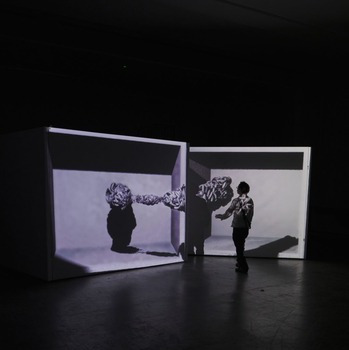
Tying into my artistic doctorate the piece 'Placeholder' is a simulation. It is a piece about our perception of music and its ontological status. Meant as a thought-provoking and active listening experience, its core idea is to withhold its own realization. A sound score is algorithmically generated in real time, but never played by an ensemble. The sound itself is a simulation in another sense: different models of instruments and their strange behaviors are explored in this score. The fact that the audience is listening to a score rather than a piece is assumed to entail an entirely different way of engaging with sound as we are challenged to imagine how the score could be interpreted, just as a musician would be, highlighting ambiguities and opportunities of the methods of sound as a score. In a way, one could say that certain aspects that might be true for every piece of music become more explicit here: The true piece of art exists only in the listener's heads.
© christopher sturmer
Patrik Lechner
Patrik Lechner, born in Vienna in 1986, has been working in the fields of experimental music and real-time video art since the 2000s. Activities as a lecturer eg. at the Music University of Vienna, the University of Applied Arts, UAS Salzburg and UAS St.Pölten. Previous performances of audio/visual performances e.g. in: Austria (e.g. Musik Protokoll, Impuls Tanz Festival), Belgium (BAM Festival), Italy, Bulgaria, Germany (ZKM), Switzerland, Canada, Dubai, Japan, Mexico, Shanghai (Expo 2010). Lechner received an honorable mention at the PRIX ars electronica 2019 in the Sound Art category.
Affair: Seven plus or minus two
Peter Plessas
Composed entirely from audio clips of spoken words, "Seven plus or minus two" is a journey into the transformation of recorded sound and was commissioned by Christine Gaigg/2nd nature for the theatre performance "Affair". The spoken words, which served as the material for this piece, are text excerpts from this performance. While five parts, out of the seven originally written, made it into the final composition. its title is a homage to the famous publication "The Magical Number Seven, Plus or Minus Two: Some Limits on Our Capacity for Processing Information" by George A. Miller in 1956.
© JJ Kucek
Peter Plessas
Trained in violin and guitar, Peter developed an early interest in studio composition and electronic music, writing and playing experimental music in addition to DJing. Following studies with Gerhard Eckel and Winfried Ritsch, Peter graduated in sound engineering from the University of Music and Performing Arts Graz. He established himself as live electronics musician, collaborating with Peter Ablinger, Gerd Kühr, Klaus Lang, Philippe Leroux, Olga Neuwirth, Klangforum Wien and musikFabrik Köln, amongst others. Peter's compositions feature tape music, chamber music for DJs, spatial music and works for dance and theater. His artistic output is lined by research in digital instrument design and auditory perception. Peter has been a visiting scholar to UC Berkeley, McGill and Concordia Universities. He has taught at IEM Graz and is currently a senior lecturer for electroacoustic composition at Vienna University of Music and Performing Arts.
plessas.mur.atLaisse pas personne
Frédéric Roverselli
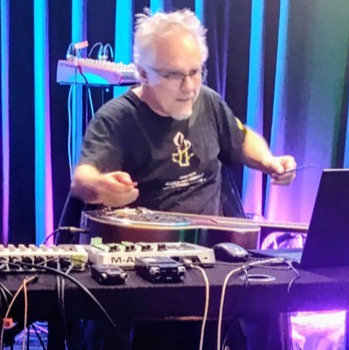
Laisse pas personne is a piece for one musician and live processing that implements my interaction scenario based compositional method, which includes the emergence of an audio score. The piece is structured into two phases. The first consists of a harvesting phase, during which fragments of the performance are extracted in real time. In the second phase, these processed and reorganized fragments re-appear to form the audio score within which the musician interacts, establishing feedback loops between the performer’s actions, the system’s analysis of incoming sound, and the evolving sonic output. Performance unfolds through the continuous negotiation of these feedback relationships, with sound acting simultaneously as material, instruction, and control signal.
© Frédéric Roverselli
Frédéric Roverselli
is a composer, sound designer and improviser, specializes in the live electronics and use of digital technologies applied to the creative process. His compositional approach integrates sound material in all its forms, whether musical or concrete, and draws inspiration from both contemporary and popular movements. His focus is on composing interactions. He is currently pursuing a master’s degree in composition and sound creation at the University of Montreal, Canada, under the supervision of Nicolas Bernier. His works and papers have been presented in several festivals in Canada, France and the UK.
break
- 10:30pm – 11:15pm
- electronic music concert
- William Turner Duffin | Twenty Four
- Cecilia Suhr | Resonant Thresholds
- Cora Hausch | Density
- details
Twenty Four
William Turner Duffin
is a collection of simple generative score-instruments forming a synthesised acoustic ecology, an ecosystem of sound that the audience can enter using their own devices. A QR code links to patches, accessible in-browser or as downloads, through which participants generate sound and join the performance. They can also be accessed at williamturnerduffin.com/twentyfour The work consists of 24 interconnected musical cells, each a patch combining synthesis, memory, and chance operations. These modular units can be arranged in any order or duration, allowing structure, texture, and gesture to emerge through their interactions. This presentation is a pre-recorded, spatialised rendering for sixteen loudspeakers. While fixed in form, the work remains open: its components can be accessed, explored, and reconfigured by the audience during or after the concert. By treating software patches as shareable compositional units, Twenty-Four proposes a participatory model of performance in which listeners may also become performers, collaborators, or composers.
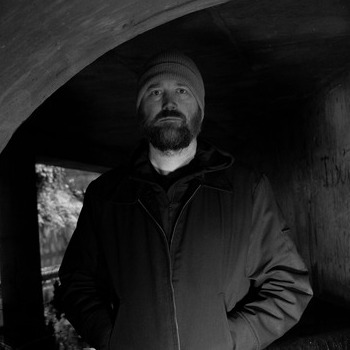
© William Turner Duffin
William Turner Duffin
BA (Hons) Creative music technology - Bath Spa University
MA Electronic arts - Middlesex University
PhD Design (on going) - Bath Spa University
In this shirt.
Resonant Thresholds
Cecilia Suhr
Resonant Thresholds explores the liminal space between human expression and technologically mediated sound. Structured around a fixed audio score, the work unfolds as a slowly transforming audiovisual environment in which violin performance interacts with live processing. Noise, resonance, and breath-like textures blur distinctions between acoustic intimacy and digital vastness, allowing the materiality of sound to become porous and unstable. Through structured live improvisation, the performer actively shapes the unfolding sonic landscape. In this environment, original digital art video, created by the composer/artist, undergoes constant digital processing triggered by the live audio, functioning as a symbolic translation of sound through visual distortion and transformation. The work invites listeners to inhabit a threshold between perception and imagination, where meaning emerges through the continuous negotiation between composed structure, live performance, and technological extension.
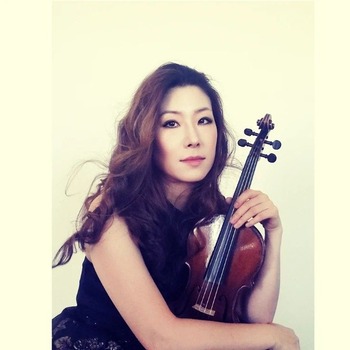
© Cecilia Suhr
Cecilia Suhr
Cecilia Suhr is an award-winning intermedia artist, multimedia composer, researcher, multi instrumentalist (violin, cello, voice, piano, bamboo flute), and painter. Her honors include receiving the Pauline Oliveros Award (IAWM), a MacArthur Foundation DML Grant, an Honorable Mention from the American Prize, and medals from the Cambridge Music Competition and Global Music Awards, the Best of Competition Winner Award from BEA, etc. Her music has been featured at ICMC, SEAMUS, NYCEMF, Mise-En Music Festival, New Music on the Bayou, Performing Media Art Festival, Hot Air Music Festival, Splice Festival, Mantis Festival, TENOR, EMM, SCI, BEAST Feast, MoXsonic, and many more. She is the author of Social Media and Music (Peter Lang, 2012) and Evaluation and Credentialing in Digital Music Communities (MIT Press, 2014). She currently serves as a full professor in the Department of Humanities and Creative Arts at Miami University Regionals.
Density
Cora Hausch
Density is a spatial realtime composition for multichannel setups using Ambisonics technology. It approaches spatial audio as patterns rather than point-sources, treating audio sources as building blocks for volumetric pressure sculptures. Realized in max-based ppooll with signal-rate modulation, Density's parametric configuration derives from oscillators' frequency, phase, and amplification. Scene and spatialization presets define movement pathways for multiple audio sources, producing complex spatial patterns through parametric control and timing variance. Density scores the spatialization layer but not the sonic aspects—actual sounds are generated by the artist in realtime on an improvisational basis.
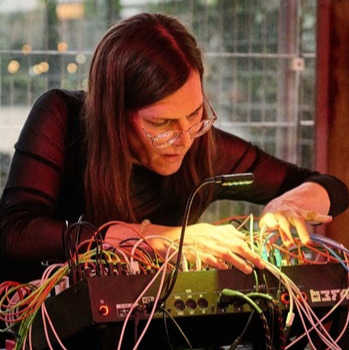
© markus gradwohl
Cora Hausch
Cora Leli Hausch (she/her) is a sound and media artist and graphic designer, head of the label Moozak, and occasionally active in the organizations Echoraeume and XOK (responsible for the Jahresendzeitschokoladenhohlkörper-Festival). She holds an MA for architecture from the Technical University of Vienna, where she investigated the relation between sound and space from an architectural and artistic perspective. As a coder she is also one of the maintainers of the open-source music software ppooll. In her sound performances, she primarily explores sound as physically perceived and different states of matter between tension and discharge. She works almost exclusively with synthetic sounds, feedback, and spatial sound techniques. As a curator, she is responsible for the design and execution of well over 100 events and numerous record releases.
hausch.io- Fri 09:00am – Sun 02:00pm
- poster exhibition foyer klangtheater
- Veronika Reutz Drobnić | Visual Complexity and Cognitive Load in Animated Graphic Scores: Evidence from Biometric and Performance Data
- Andres Gutierrez Martinez and Chiara Percivati | Timbre as score. A machine-listening instrument for HCI performance of bass clarinet multiphonics.
- Claire Paul | Toward a Psychoacoustic System of Graphic and Performance Scores: Improvisation, Healing Frequencies, and Embodied Sound
- David M. Weigl and Werner Goebl | Machine-readable representations of music notation as digital music research infrastructure
- details
Visual Complexity and Cognitive Load in Animated Graphic Scores:
Evidence from Biometric and Performance Data
Veronika Reutz Drobnić
This poster presents an empirical study of performer stress and interpretive strategy in the reading of scrolling graphic notation. Using physiological measures, questionnaires, interviews, and performance data, the project examines how visual parameters such as symbol density, overlap, and spatial complexity influence musicians’ responses and shape their real-time interpretive processes. The findings suggest that performers do not passively decode graphic scores, but actively construct translation systems that balance perceptual, bodily, and musical constraints. The poster contributes to current discourse on graphic notation by framing performance as a situated process of negotiation, adaptation, and meaning-making.

© Veronika Reutz Drobnić
Veronika Reutz Drobnić
Veronika Reutz Drobnić is a composer and published researcher of new music, acclaimed for her innovative work with non-traditional, visual, and folk-based materials. Her research examines neurocognitive and perceptual processes in performing graphic and animated scores, bridging music composition, cognitive neuroscience, and visual arts. Her award-winning music has been performed worldwide and featured on TV and radio in Germany, Croatia, and Japan. She studied at the Music Academy Zagreb, HDMK Stuttgart, HfM Karlsruhe, and Kunitachi College of Music, Japan. Currently a PhD candidate at HfM Karlsruhe and ZHdK Zürich, on Erasmus at KMH Stockholm, she has collaborated with renowned ensembles including SWR Symphony Orchestra and Badische Staatskapelle. A recipient of major grants (Cusanuswerk, BW,ZONTA, PROMOS), Veronika’s ballet Black Puzzle ~ Still, I Rise is in the repertoire of the Croatian National Theatre.
Timbre as score.
A machine-listening instrument for HCI performance of bass clarinet multiphonics.
Andres Gutierrez Martinez and Chiara Percivati
This project presents a curated collection of bass clarinet multiphonics drawn from existing literature and the authors’ artistic practice. It combines controlled recordings, audio analysis, and visualisation to examine their spectral, temporal, and perceptual qualities. Using FluCoMa and SuperCollider, the multiphonics are analysed through a set of timbral descriptors and mapped into interactive 2D visualisations that provide practical performance information such as fingerings and available partials. In a second phase, these visualisations are used as exploratory maps based on timbral similarity and contrast, fingering proximity, and performance effort. Subsequently, drawing on the recorded corpus, a machine-listening instrument was developed that matches the timbral attributes of incoming sounds with the dataset for live interaction via concatenative synthesis. The project introduces multimodal exploration combining visual representations with timbre based interaction.
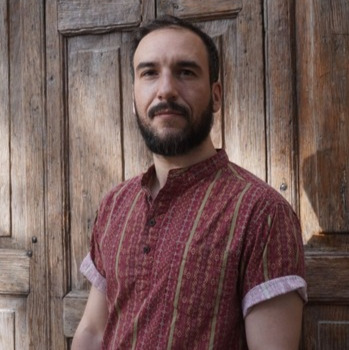
© Andrés Gutiérrez Martínez
Andrés Gutiérrez Martínez
Andrés Gutiérrez Martínez is a composer and electronic music performer whose recent work is informed by the perceptual study of timbre and its role in contemporary music. He has a PhD in music composition from the University of California San Diego and was a postdoctoral fellow at the Music Perception and Cognition Lab, working under the direction of Stephen McAdams at McGill University from 2022 to 2025. Gutierrez Martinez is currently Professor for Electroacoustic Composition at the Gustav Mahler Privatuniversität für Musik in Klagenfurt, Austria.
© Tiange Zhou
Chiara Percivati
Chiara Percivati is a clarinettist, performer, and researcher. Her artistic work and research focus on exploring, questioning, and expanding the symbiotic relationship between performer and instrument. She conducts research in the field of instrument preparation and augmentation as a PhD candidate at the Orpheus Institute and the University of Antwerp, and as a researcher at the Royal Conservatoire Antwerp.
Toward a Psychoacoustic System of Graphic and Performance Scores:
Improvisation, Healing Frequencies, and Embodied Sound
Claire Paul
This project presents a flexible system of graphic and performance scores designed to support improvisation through psychoacoustic awareness and embodied listening, inspired by trauma-informed practice as composition. Rather than prescribing fixed musical outcomes, the scores function as visual prompts that guide performers’ attention to resonance, vibration, spatial interaction, and perceptual experience. Drawing on concepts such as involuntary musical imagery (IMI), perception, anamnesis, and phonomnesis, the system emphasizes memory, recursion, and cross-sensory interpretation as generative forces in sound-making. Sustained frequencies, beating patterns, and timbral shifts are treated as primary materials, encouraging gradual transformation and deep listening. The approach is instrument-agnostic and adaptable to acoustic, electronic, and hybrid contexts. By framing sound as relational and spatially dynamic, this work contributes a perceptually oriented model of notation that foregrounds presence, intuition, and the embodied experience of sound.

© Claire Paul
Claire Paul
Claire Paul is an interdisciplinary artist exploring performance, sound, and visual process. She holds an MFA in Drawing and Painting from Georgia State University (2009) and a BME in Music from Florida State University (1999). A bassoonist under Jeff Keesecker, Paul has developed experimental approaches to electronic bassoon performance and has presented guest masterclasses at Florida State University in 2015 and 2025. Included in the publication A Year of Deep Listening: 365 Text Scores for Pauline Oliveros by The Center for Deep Listening. Recent projects include a solo improv performance at Spruill Gallery (2025), exhibitions at ATHICA: Athens Institute for Contemporary Art and the Atlanta Contemporary (2024), Mysterium at University of Georgia (2023), with Yusuf Ali at Blue Heron Nature Preserve (2022). In 2017 at the Atlantic Center for the Arts with Zeena Parkins and Jennifer Monson. The SEAS International Art Exhibition and Ionion Center Art Exhibition in Greece (2016)
Machine-readable representations of music notation as
digital music research infrastructure
David M. Weigl and Werner Goebl
MEI, the XML-based format developed by the Music Encoding Initiative, a community of music scholars, librarians, and technologists, explicitly encodes musical semantics of different traditions alongside common music notation, including neumes, mensural notation, or tabulatures. By explicitly encoding musical semantics, it enables advanced computational analysis and support the development of interactive digital tools for musicological research, rehearsal, and performance. The browser-based editor mei-friend, served at mei-friend.mdw.ac.at, facilitates access to these encodings by allowing users to import multiple formats into the standardized MEI framework. To support our digital musicology research activities as part of the ‘Signature Sound Vienna’ project, we have developed this editor in coordination with other scholarly tools, including ‘Listen Here!’ listen-here.mdw.ac.at, a Web application for computer-assisted close-listening and annotation of collections of performance recordings, and ‘Primal’ primal.mdw.ac.at, a tool for the dissemination of annotated digital evidence objects for music scholarship.
© David M. Weigl
David M. Weigl
David M. Weigl is a senior scientist at the Department of Music Acoustics – Wiener Klangstil at the mdw – University of Music and Performing Arts Vienna, where he conducts interdisciplinary research in cultural and social informatics with a focus on Digital Humanities. He was Principal Investigator on the project ‘Signature Sound Vienna’ (SSV), a digital musicology investigation into the Vienna Philharmonic Orchestra’s New Year’s Concert series, in which he co-developed software tools including the mei-friend editor for music encodings and the ‘Listen Here!’ environment for computer-assisted close listening. He currently leads ‘Vienna’s New Year’s Concerts: Same Procedure as Every Year?”, a science communication project building on the outputs of SSV; and ‘Let’s Encode!’, establishing a Citizen-Science platform for collaborative (crowd-)encoding and validation of music scores. All projects are funded by the FWF – Austrian Science Fund.
© Werner Goebl
Werner Goebl
Werner Goebl is Professor of Music Acoustics and Performance Science and head of the Department of Music Acoustics – Wiener Klangstil (IWK). He holds a PhD in Systematic Musicology of the University of Graz, and master degrees of the University of Vienna (musicology, psychology) and mdw (piano chamber music performance). With extensive research experience at the Austrian Research Institute for Artificial Intelligence Vienna, the Royal Institute of Technology Stockholm, McGill University Montreal, Johannes Kepler University Linz, he joined the faculty of mdw in 2009, where he obtained his venia on Music Acoustics in 2015. His recent work in music informatics and digital approaches to our cultural heritage include projects funded by the European Commission (“TROMPA – Towards Richer Online Music Public-domain Archives” 2018–21) and by the FWF (“Same procedure as every year? Quantifying the Signature Sound of the Vienna Philharmonic’s New Year’s Concerts” PI David M. Weigl). Together with David M. Weigl and Anna Plaksin, he is one of the core developers of mei-friend.