Program
2026 05 21
- ÖAW - Seminarraum 02
- Alte Postsparkasse, Georg‐Coch‐Platz 2, 1010 Wien
- 02:30pm Welcome
- 02:45pm Opening
- Opening of the conference by Johannes Meissl, Vice Rector of the mdw
- Welcome remarks by Cat Hope, General Chair of the TENOR Steering Committee
- Welcome remarks by Piotr Majdak, host of the conference at the Austrian Academy of Sciences (ÖAW)
- Introduction by Elisabeth Schimana, Piotr Majdak, Susanne Kogler, Thomas Grill
- 03:30pm – 04:00pm
- paper session #1
- Lindsay Vickery | An Exploration of Audio-Score Techniques and Practices
- details
An Exploration of Audio-Score Techniques and Practices
Lindsay Vickery
This paper discusses the emergence of the Audio Score as a distinct compositional practice in which auditory communication, rather than visual notation, is the primary medium through which compositional information is conveyed to performers. Drawing on recent theoretical writing by Bhagwati, Sdraulig and Lortie, Schimana, and d’Heudières, the study situates Audio Scores within the evolution of technological, aesthetic, and ideological developments. The discussion proposes a framework distinguishing three core roles of auditory material in Audio Scores— orientation, emulation, and instruction—and seeks to clarify the boundaries between Audio Scores and adjacent practices. The analysis foregrounds performer experience as a critical site of evidence through detailed case studies of works by d’Heudières, Schimana, and the author, all performed by the Australian ensemble GreyWing.
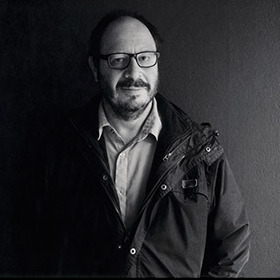
© Lindsay Vickery
Lindsay Vickery
Lindsay Vickery is a composer, performer and researcher, and a founder member of New Music ensembles Decibel, GreyWing, HEDKIKR and Magnetic Pig. His work explores relationships between score presentation and musical structure, and between electronic/acoustic, composed/interactive and improvisational practices, with a particular focus on coordinating live performers and electronics. His music spans solo works to opera, in interactive, improvised and notated contexts, and has been commissioned for concert, dance and theatre. He is an active international collaborator and has performed at SWR Tage für Neue Musik, Huddersfield Contemporary Music Festival, Dark Music Days, Audio Art, Tokyo Wondersite, Café Oto and The Knitting Factory and others. Vickery is part of the team that developed the Decibel Scoreplayer, and coordinates Composition and Sonic Arts at WAAPA, Edith Cowan University.
- 04:00pm – 05:00pm
- paper session #2
- Sébastien Roux | Listening Guides as Compositional Devices: Textual and Formal Strategies in Les Dispartions
- Ainolnaim Azizol | Living Audio Scores: Designing Listening-Based Notation in Nada Sfera Playground
- details
Listening Guides as Compositional Devices: Textual and Formal Strategies in Les Dispartions
Sébastien Roux | Ircam
This article examines the notion of the listening guide, considering it not as an external device accompanying a work, but as an operator integrated into the very form of the sonic experience. It is based on Les Disparitions (ambiantes et acousmatiques), a project taking the form of a listening session with spatialized sound, organized around the idea of sound disappearance within the context of field recording. The project articulates two complementary modes of listening guidance. The first relies on a text-based guide synchronized with the music and delivered to the audience via their mobile phones, momentarily orienting auditory attention. The second is embedded within the sonic form itself, where the progressive exposure and subsequent disappearance of a target sound bring about a transformation in listening modes. Based on a research protocol grounded in listening interviews, this article shows how these strategies of disappearance foster a transition from causal listening toward a mode of listening oriented toward the sonic properties themselves.

© Marielys Lorthios
Sébastien Roux
Sébastien Roux (b. 1977, Lyon) is a sound artist and PhD candidate in research-creation at IRCAM (Paris), where his doctoral project investigates the composition of auditory attention through protocol-based approaches. His practice spans experimental music, sound art, and installation, often engaging with psychoacoustics, cognitive science of music, and listening practices. His projects frequently take participatory forms, involving audiences directly in processes of perception.
sebastienroux.netLiving Audio Scores: Designing Listening-Based Notation in Nada Sfera Playground
Ainolnaim Azizol | Faculty of Music Universiti Teknologi MARA Malaysia
Nada Sfera playground is a web-based live soundscape installation in which environmental audio streams are transformed into musical form through active listening and real-time interaction. Rather than positioning sound as a fixed material to be reproduced or annotated, the system invites visitors to engage with sound as a dynamic, evolving process. Participants shape the sonic outcome by manipulating parameters such as real-time granular synthesis, spatial direction, sound diffusion, and acoustic intensity, allowing each interaction to generate a unique realisation of the work. As the sonic environment is continuously variable and non-linear, performers and visitors require a form of guidance that supports interpretation without prescribing exact outcomes. In response, this paper proposes the concept of living audio scores as a listening-based notational framework for Nada Sfera Playground. These scores function as perceptual roadmaps rather than visual or symbolic representations, guiding musical form through attention, spatial awareness, and textural listening. Where visual or symbolic elements are present, they operate only as secondary orientation cues and do not function as a visual score. By articulating macro-structural trajectories while allowing micro-level sonic variation, living audio scores enable coherent yet open-ended performances within a live soundscape context. The study situates Nada Sfera Playground within contemporary discourse on sound as score, non-visual-focused notation systems, and ecological listening, arguing that listening-based notation offers a viable alternative to reading-oriented score paradigms in web-based and installation-based sonic practices.
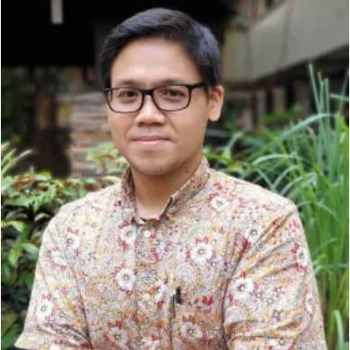
© Ainolnaim Azizol
Ainolnaim Azizol
Ainolnaim Azizol (b. 1987) is a Malaysian contemporary classical composer, sound artist, and researcher whose work spans electroacoustic music, soundscape composition, and interdisciplinary sonic arts. His compositions have been commissioned and presented internationally at platforms such as the Acht Brücken Musik Festival (WDR3, Germany), Asian Composers League (Japan, 2nd Prize), New Recorder Music Festival (Switzerland, 3rd Prize), MA/IN ~ Spaziomusica (Italy), Linux Audio Conference (Stanford University, USA), Bristol Loudspeaker Orchestra (UK), Bristol New Music Festival (UK), and the New York City Electroacoustic Music Festival, among others. His artistic research focuses on eco-cultural soundmarks as a catalyst for articulating Malay identity through sound art practice, bridging listening, environment, and cultural memory. Ainolnaim was awarded the MARA Scholarship for his PhD in Sound Arts at the University of Bristol in 2019 under the Graduate Excellence Programme (GrEP). He is the curator of the SPECTRA Electroacoustic Music Festival (2014–present) and SoundBytes Recital series, as well as the founder of the Malaysia Electroacoustic Music Lab (MEMLab) and SPECTRA Collective. He currently serves as a Senior Lecturer at the Faculty of Music, Universiti Teknologi MARA (UiTM), Vice President of the Malaysian Composers Collective (MCC), Founding President of MEMLab, and Head of the Interactive Computer Music and Musical Acoustics (i-COMMA) Research Interest Group at UiTM.
ainolnaim.wordpress.combreak
- 05:15pm – 06:45pm
- workshop #1
- Rob Canning | Evaluating Oscilla as a Performable Sound Score System
- details
Evaluating Oscilla as a Performable Sound Score System
Rob Canning
This workshop is conceived as an exploratory and evaluative session rather than a tool demonstration. Its purpose is to collectively investigate Oscilla as a potential environment for sound-score creation, situated within the broader lineage of audio scores and listening-led notation. Rather than presenting Oscilla as a finished or prescriptive solution, the workshop invites participants to critically examine what compositional and performative affordances emerge when sound, animation, navigation, and execution semantics are embedded directly into a graphic score surface. Oscilla is a browser-based framework in which graphic scores authored in SVG function as executable environments. Temporal structure, animation, navigation, OSC routing, and audio cues are attached directly to visual elements, allowing sound to operate as instruction, orientation, constraint, and structural signal. The workshop assumes no prior experience with Oscilla and does not require installation or programming expertise. All participants will receive a complete, self-contained workshop pack, designed to work both online and fully offline.
github.com/robcanning/oscillarobcanning.github.io/oscilla
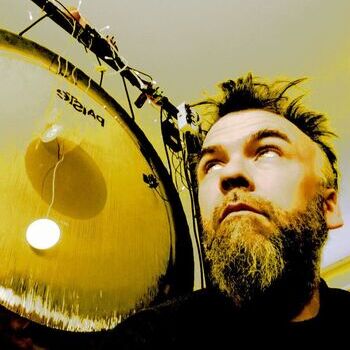
© Rob Canning
Rob Canning
Rob Canning is a composer and improviser whose work spans acoustic performance, live electronics, and open-form composition. His practice has primarily focused on improvisation, collaborative music-making, and the development of free and open-source tools for artistic work. He is the creator of Oscilla, a browser-based environment for graphic and executable scores, developed as part of a broader interest in accessible, networked, and performer-centred systems. What You Heard marks his first composition conceived explicitly as a sound score.
break
- 07:30pm – 08:00pm
- concert
- Rob Canning | What You Heard
- Marco Döttlinger | Learning to Die (Version for Duo)
- performed by ANNEA and Soundscore-Ensemble
- details
What You Heard
Rob Canning | for one or more performers a sound score for listening, memory, and response
What You Heard (2026) is a sound score for one or more performers. Two strata of prescribed material run through it. The first centres on reference pitches and intervals: anchoring drones that ground and stabilise the listening. Around them, stochastic possibility fields of microtonal variation invite performers to weave their own deviations. The second is seed material: short audio recordings drawn from the composer's sonic memory, embedded in the score as private listening for the performers. Performers record their own responses directly into the score, where those responses persist as seed material for future interpreters, whose responses in turn become seeds for whoever follows. Each response carries personal significance: a quotation, fragment, or phrase encoded with memory, so that on re-encounter a cue is no longer abstract but a sound charged with memory trace. The work accumulates as a palimpsest of authorship and memory across iterations. The score was created with Oscilla, a browser-based environment for animated, cue-driven graphic scores.
© Rob Canning
Rob Canning
Rob Canning is a composer and improviser whose work spans acoustic performance, live electronics, and open-form composition. His practice has primarily focused on improvisation, collaborative music-making, and the development of free and open-source tools for artistic work. He is the creator of Oscilla, a browser-based environment for graphic and executable scores, developed as part of a broader interest in accessible, networked, and performer-centred systems. What You Heard marks his first composition conceived explicitly as a sound score.
Learning to Die
Marco Döttlinger
Nine short audio pieces demonstrate sonically how a recurrent neural network (RNN) learns to generalizea data set. The title of these miniatures — LEARNING TO DIE — refers to the training data used, famous death arias from opera history (a character dies on stage). Recordings of arias by Purcell, Puccini, Donizetti, Verdi and Wagner were used to train this model. The audio tracks are synthesized entirely by the model and range from (amorphous, shapeless) noises, minimal gestural results of the first training epochs to a (somehow) vocal-orchestral performance of the fully trained model. These pieces serve as the basis of an audio score for musicians. An audio segmentation algorithm removed the vocal parts (or what the algorithm considers 'vocal'). These 'voice-only' tracks are played back to the instrumentalists by a prominently placed loudspeaker as soloist (‘virtual voice’).
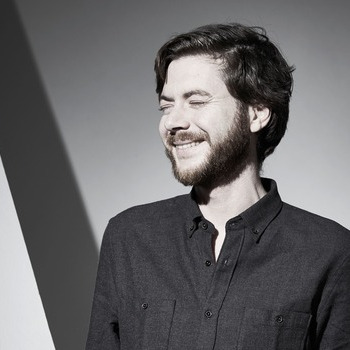
© Marco Döttlinger
Marco Döttlinger
Marco Döttlinger is an Austrian composer, artist, educator and researcher in the fields of composition, generative art, media art and sound art. He studied composition, computer music and music theory in Salzburg, Paris and Basel and currently teaches at SEM - Studio for Electronic Music at the Mozarteum University Salzburg, is a lecturer at "Science&Art"-Program of Mozarteum and Salzburg University and Artistic Researcher at mdw Vienna in the Project Spirits in Complexity PEEK AR821. He is a member of NAMES - New Art and Music Ensemble Salzburg. His works are primarily concerned with micro-temporal shifts on the boundary between flow and stasis, mainly related to algorithmic, generative procedures in time based arts. Currently working on his dissertation on ‘Emergent properties - intra-acting with algorithms’ at the ARC mdw Vienna and developing interdisciplinary projects with different artists and musicians. He lives and works in Salzburg and Vienna.
doettlinger.org