Program
2026 05 24
- mdw
- Anton-von-Webern-Platz 1, 1030 Wien
- Bankettsaal
- 10:00am – 11:00am
- paper session #14
- Markus Lepper and Baltasar Trancón Y Widemann | The F Operator: A Proposal for a Generative Notation for Frequency Factors in Music
- Daniel Miller | A Prosodic Layer for Suprasegmental Features Spanning Rhythm Trees, Motivated by Carnatic Rhythmical Structures
- details
The F Operator: A Proposal for a Generative Notation for Frequency Factors in Music
Markus Lepper and Baltasar Trancón Y Widemann | semantics gGmbH Berlin, Technische Hochschule Brandenburg
In music theory and historical musicology, tuning systems can be discussed from a variety of angles, ranging from historically given contingent facts or hypotheses, over physiological and psychological experiments, up to integration into an aesthetic theory. All these different approaches define specific collections of objects and calculation rules and live on a symbolic side. Eventually, these calculations deliver numeric factors to be applied to some reference frequency. These form the factor side. We propose F-operator, a notation system for these values which allows easy identification and labeling of commonly used factors and thus easy comparison of distinct systems from the symbolic side. F-operator is equally well suited for writing, talking, speech recognition, sign language, Braille, and computer representation.

© Markus Lepper
Markus Lepper
Markus Lepper studied composition with Wolfgang Hufschmidt and electronic composition with Dirk Reith at the Folkwanghochschule in Essen. PhD in informatics with Peter Pepper at the Technische Universität Berlin and in musicology with Michael Oehler and Hartmuth Kinzler at the Osnabrück University. Lives and works as computer scientist, composer, and music theorist in Berlin.

© Baltasar Trancón Y Widemann
Baltasar Trancón Y Widemann
Baltasar Trancón Y Widemann studied computer science with Peter Pepper at the Technische Universität Berlin. He holds a PhD and Habilitation degree in computer science. He has worked as a researcher and lecturer at academic institutes in Limerick, Bayreuth, Ilmenau and Elmshorn, and as a software engineer in Karlsruhe. He is a tenured professor at the Technische Hochschule Brandenburg.
A Prosodic Layer for Suprasegmental Features Spanning Rhythm Trees,
Motivated by Carnatic Rhythmical Structures
Daniel Miller | Independent Researcher
Rhythm trees model durational structure as recursive equal subdivision, but musical rhythm often involves suprasegmental patterns that cross-cut the subdivision hierarchy— long-distance dependencies that context-free grammars cannot express. Carnatic rhythmic techniques provide cleartest cases: rhythmic sangati preserves motives across changes in subdivision density and accent placement, while jathi bhedam treats irregular accent spans as compositional units. Drawing on work in prosodic phonology which models intonation as a tree-based hierarchy distinct from segmental structure, we introduce an accent tree that overlays a base rhythm tree. The accent tree acts on a depth projection— a sequence of positions at a chosen metrical level— and partitions those positions into spans that may cross subdivision boundaries. Each span either inherits the underlying rhythm or hosts an attached rhythm tree time-scaled to fill it. Accent trees compile to labeled duration sequences that map back to rhythm trees, so the formalism remains compatible with existing rhythm-tree grammars while capturing long-distance dependencies.

© Sophia Chung
Daniel Miller
Daniel Miller is a multidisciplinary artist and technologist whose creative and research practice explores algorithmic composition, hardware synthesizers, and digitally mediated notation and performance. His work has been supported by organizations including the Fulbright Program, the Watson Foundation, and BMI. Alongside his artistic practice, he has worked as a software engineer, most recently at a startup focused on drone delivery of biomedical supplies. He holds an M.A. in Digital Musics from Dartmouth College and a bachelor’s degree in Music Composition from Lawrence University. He splits his time between Taiwan and Seattle with his wife and daughter.
- 11:00am – 12:30pm
- paper session #15
- Veronika Mattová and Michal Schwarz | From Rhythm to Representation: BTS’s “Idol” as a Multimodal Audio Score
- Jingsong Teng | Individualizing Graphic Notation through Botanical Metaphors: A Practice-Based Study of Botánica
- Pierre-Luc Lecours, Nicolas Bernier, Evan Montpellier and Phillipe-Aubert Gauthier | SIGN/e: Symbol-based Interface for Graphic Notation Edition for Ableton Live
- details
From Rhythm to Representation: BTS’s “Idol” as a Multimodal Audio Score
Veronika Mattová and Michal Schwarz | Masaryk University
Contemporary Korean music, especially through artists like group BTS, has reshaped global music by integrating traditional Korean elements with modern pop influences. This study examines how BTS’s song “IDOL” functions as a multimodal audio score, blending traditional rhythmic structures like jangdan (cyclical rhythms) and dance forms such as bukcheong sajanori (lion mask dance) with contemporary K-pop production. By analyzing Jeongganbo, a traditional Korean time-based notation system, this paper demonstrates how these cultural elements are adapted and transformed into visual, rhythmic, and sonic components of “IDOL”. The study highlights how rhythmic cycles, onomatopoeic syllables, and choreography are used to create a hybridized musical experience. Additionally, the research explores how “IDOL” exemplifies transmedia storytelling, where music, video, choreography, and fan interaction form a dynamic, layered narrative. This paper illustrates how BTS reinterprets traditional Korean musical practices within a global pop context, showing how multimodal audio scores and transmedia strategies allow for a deeper, more immersive engagement with music, bridging cultural and temporal gaps.

© Veronika Mattová
Veronika Mattová
I am a PhD candidate in Korean Studies at the University of Vienna and an assistant at Masaryk University, focusing on Korean popular music, parasocial interactions, and digital culture. My research explores how K-pop functions as a space for negotiating identity, emotion, and social inequality in a global context, with particular attention to its cultural and communicative impact. With a background in cognitive science and psychology, I approach music as a multimodal and socio-cultural phenomenon, examining how audiences form emotional bonds with artists and how these relationships shape perception, language, and collective identity across cultures.My work has been presented at international conferences and engages with themes such as global fandom, cultural translation, digital media environments, and the role of popular music in shaping contemporary Korean society.

© Michal Schwarz
Michal Schwarz
My long-term engagement in Korean and East Asian studies combines more academic fields. I have graduated in philosophy and the science of religions, and I am holding a Ph.D. in Indo-European comparative linguistics. My research projects have focused on comparative history and the development of religion in Mongolia, Korea, and Vietnam. I am also teaching the economic geography of Korea, Central, and Southeast Asia. I am a founder of the Department of Mongolian, Korean, and Vietnamese Studies at Masaryk University (MU), where I was establishing courses about Korean language and modern Korean Pop-music. I am a regular visitor of Kangwon National and Jeju National University at Jeju Island. As member of Altaic Society of Korea, I am regularly presenting at confernces at Seoul National University.
Individualizing Graphic Notation through Botanical Metaphors:
A Practice-Based Study of Botánica
Jingsong Teng | Independent composer; Royal Danish Academy of Music (alumnus), Copenhagen
Botánica (2024) is a three-part suite for five to eighteen pitched instruments written in graphic notation. Across its movements—Tree, Flower, and Ivy —the score translates botanical growth processes into performable rule sets, so that “nature” functions not only as imagery but as an interface for ensemble decision-making. In this sense, the score operates as a listening guide: it specifies where decisions occur and how sonic states are maintained, rather than prescribing fixed musical events. This study builds on practice-as-research and draws on Peircean semiotics. Through this lens, I introduce the concept of individualised graphic notation. In this approach, each movement uses a distinct visual grammar that distributes performer choice across parameters (timing, path selection, local ordering) while retaining a clear sonic identity. Through analysis of the score and rehearsal documentation, I show that the piece explores three degrees of aleatoric control in practice. Tree employs branching layers that allow flexible pacing within a fixed pitch world. Flower uses adjacency constraints (inspired by phyllotaxis) to yield emergent harmonies. Ivy combines limited transposition with shape-coded ordering freedoms to model gradual transformation. I argue that ecological metaphors become compositionally useful when formalised as constraints that performers can read, negotiate, and collectively maintain.

© Jingsong Teng
Jingsong Teng
Jingsong Teng is a composer and researcher whose work focuses on graphic notation, structured openness, and ecological metaphor in contemporary music. He holds a Master’s degree in Composition from the Royal Danish Academy of Music, Copenhagen. His recent work explores how visual design, performer agency, and listening interact in open and semi-open compositional systems. His piece Botánica investigates botanical growth as a model for individualized graphic notation, while other projects engage with multimedia, spatial thinking, and environmental data. Teng’s music and research have been presented in academic and artistic contexts, with recent work accepted for presentation at TENOR 2026 and ICMC 2026. He is particularly interested in notation as a site where composition, interpretation, and rehearsal practice meet.
SIGN/e: Symbol-based Interface for Graphic Notation Edition for Ableton Live
Pierre-Luc Lecours, Nicolas Bernier, Evan Montpellier and Phillipe-Aubert Gauthier | Université de Montréal
This article outlines the functionality of SIGN/e (Symbol- based Interface for Graphic Notation Edition), a set of Max for Live devices allowing to easily create, read and animate graphic scores within Ableton Live. It addresses the need for an efficient DAW-integrated notation system suited for electronic, instrumental and mixed-media practices. Taking advantage of the intuitive Ableton Live workflow, SIGN/e allows the creation and parametric control of individual symbols and textual elements as well as management of global visualisation properties. This architecture allows the construction of dynamic synchronized graphic scores while benefiting from Ableton Live’s timeline and automation system. SIGN/e is built entirely with standard Max objects to ensure long-term stability and compatibility. The visual rendering pipeline relies on Jitter and OpenGL, with shaders written in Gen to handle specific needs such as grid generation, cropping, and compositing. SIGN/e provides a flexible environment for writing and performing animated scores. This article summarizes SIGN/e’s conceptual foundations, technical structure, and potential for expanding contemporary notation practices.

© Juliette Missud
Pierre-Luc Lecours
Pierre-Luc Lecours is a composer and digital artist based in Montreal whose work lives at the intersection of composition, electronic texture, and audiovisual storytelling. Balancing formal precision with sensory depth, his performances merge modular synthesis, acoustic instruments, and real-time visuals into immersive, emotionally charged experiences. As a researcher, he is interested in the interpretation of electronic music, the decompartmentalization of contemporary musical practices, and the exploration of new forms of audiovisual expression.

© Isabelle Gardner
Nicolas Bernier
Nicolas Bernier is interested in the performance of electronic music, sound installations, musique concrète, live electronics, post-rock, noise improvisation, and video art, while also working with dance, theater, moving images, and visual arts. Amidst this eclecticism, his artistic concerns remain constant: the balance between the cerebral and the sensual, and between organic sources and digital processing. He is a professor of digital music at the Université de Montréal.

© Evan Montpellier
Evan Montpellier
Evan Montpellier is an artist based in Montréal. He collaborates to develop unique aesthetic languages in live audiovisual performance, interactive artworks, and composition. His projects have been seen at ISEA2020 and Luminothérapie. Evan is a former Topological Media Lab member (2012-2022) and co-founded Serious Computer Group. He currently works as a Senior Technical Artist at Felix & Paul Studios. Evan holds a Concordia Intermedia BFA and a McGill University Religious Studies BA.

© Phillipe-Aubert Gauthier
Phillipe-Aubert Gauthier
Philippe-Aubert Gauthier, professor at UQÀM's École des arts visuels et médiatiques, is a mechanical engineer and PhD in acoustics. He works at the intersection of arts, sciences, and technology. His creations range from installations and digital art to performance and music. Having produced over 50 artworks presented globally, this grant-winning artist and researcher published over 80 articles.
break
- Josef Haydn-Saal
- 01:00pm
- TENOR 2027
- Andrea Agostini | Announcement of the TENOR Conference 2027
- 01:15pm – 02:00pm
- concert matinee - soundscore-ensemble
- Markus Lepper | berlim junky
- Marco Döttlinger | Learning to Die (Version for Ensemble)
- Tahereh Nourani-Mokaramdoust | SARV
- performed by soundscore-ensemble
- details
berlim junky
Markus Lepper | performed by sounscore-ensemble
"Berlim Junky" is a sequence of 11 DIN-A-1 [sic!] graphics to be interpreted by a punk band, approximately one minute per page. It tries to reflect the real live of a Berlin junky. Because the letters of the title serve as page numbers, one of the n-s had to be altered, but the integrity of the person should not be harmed.
© Markus Lepper
Markus Lepper
Markus Lepper studied composition with Wolfgang Hufschmidt and electronic composition with Dirk Reith at the Folkwanghochschule in Essen. PhD in informatics with Peter Pepper at the Technische Universität Berlin and in musicology with Michael Oehler and Hartmuth Kinzler at the Osnabrück University. Lives and works as computer scientist, composer, and music theorist in Berlin.
Learning to Die
Marco Döttlinger | performed by sounscore-ensemble
Nine short audio pieces demonstrate sonically how a recurrent neural network (RNN) learns to generalizea data set. The title of these miniatures — LEARNING TO DIE — refers to the training data used, famous death arias from opera history (a character dies on stage). Recordings of arias by Purcell, Puccini, Donizetti, Verdi and Wagner were used to train this model. The audio tracks are synthesized entirely by the model and range from (amorphous, shapeless) noises, minimal gestural results of the first training epochs to a (somehow) vocal-orchestral performance of the fully trained model. These pieces serve as the basis of an audio score for musicians. An audio segmentation algorithm removed the vocal parts (or what the algorithm considers 'vocal'). These 'voice-only' tracks are played back to the instrumentalists by a prominently placed loudspeaker as soloist (‘virtual voice’).
© Marco Döttlinger
Marco Döttlinger
Marco Döttlinger is an Austrian composer, artist, educator and researcher in the fields of composition, generative art, media art and sound art. He studied composition, computer music and music theory in Salzburg, Paris and Basel and currently teaches at SEM - Studio for Electronic Music at the Mozarteum University Salzburg, is a lecturer at "Science&Art"-Program of Mozarteum and Salzburg University and Artistic Researcher at mdw Vienna in the Project Spirits in Complexity PEEK AR821. He is a member of NAMES - New Art and Music Ensemble Salzburg. His works are primarily concerned with micro-temporal shifts on the boundary between flow and stasis, mainly related to algorithmic, generative procedures in time based arts. Currently working on his dissertation on ‘Emergent properties - intra-acting with algorithms’ at the ARC mdw Vienna and developing interdisciplinary projects with different artists and musicians. He lives and works in Salzburg and Vienna.
doettlinger.orgSARV
for 5 players and 4 bluetooth speakers
Tahereh Nourani-Mokaramdoust | performed by sounscore-ensemble
A composition for multi-channel sound installation in which each performer becomes a mobile channel moving through the performance space. SARV (cypress in English) is inspired by the threads that connect the multispecies struggles against colonialism, extractivism, destruction and the theft of land and resources across time, space, and species. Translated into sound, these multispecies struggles are voiced through field recordings of animal languages, forming the compositional foundation upon which minimal melodic and rhythmic elements slowly build and evolve. The installation unfolds spatially as performers move through the audience. The result is an immersive multi-perspectival sonic environment that reflects the interconnected nature of these ongoing struggles.
© Marisel Bongola
Tahereh Nourani
Tahereh Nourani is a composer and sound artist in the field of experimental sound art. She explores the potential of Deep Listening through slowness and minimalism. Nourani specializes in extended and unconventional playing techniques on her instruments, the bass and the flute, and integrates objects, field recordings, and languages into her work. Nourani is a scholarship recipient of the Austrian Federal Ministry f. Housing, Arts, Culture, Media and Sports, she is a member of the Vienna Improvisers Orchestra as well as the artist collective QMA, SHAPE+ Artist and winner of the PhonoECHOES Award for experimental sound art. She has performed at venues and festivals such as Belvedere 21 (AT), Moers Festival (DE), UH Fest (HU), and Üle Heli Festival (EE) and has composed music for installations, film, theater, contemporary dance, and performance. She studied European classical flute at the Tehran University of Arts and at the University of Music and Performing Arts Vienna (MDW) and was Artist in Residence at AQB (HU), Casa di Rosa (CH), and Hotel Pupik (AT).
taherehnourani.com02:00pm Field trip to a winery
- Fri 09:00am – Sun 02:00pm
- poster exhibition foyer Klangtheater
- Veronika Reutz Drobnić | Visual Complexity and Cognitive Load in Animated Graphic Scores: Evidence from Biometric and Performance Data
- Andres Gutierrez Martinez and Chiara Percivati | Timbre as score. A machine-listening instrument for HCI performance of bass clarinet multiphonics.
- Claire Paul | Toward a Psychoacoustic System of Graphic and Performance Scores: Improvisation, Healing Frequencies, and Embodied Sound
- David M. Weigl and Werner Goebl | Machine-readable representations of music notation as digital music research infrastructure
- details
Visual Complexity and Cognitive Load in Animated Graphic Scores:
Evidence from Biometric and Performance Data
Veronika Reutz Drobnić
This poster presents an empirical study of performer stress and interpretive strategy in the reading of scrolling graphic notation. Using physiological measures, questionnaires, interviews, and performance data, the project examines how visual parameters such as symbol density, overlap, and spatial complexity influence musicians’ responses and shape their real-time interpretive processes. The findings suggest that performers do not passively decode graphic scores, but actively construct translation systems that balance perceptual, bodily, and musical constraints. The poster contributes to current discourse on graphic notation by framing performance as a situated process of negotiation, adaptation, and meaning-making.

© Veronika Reutz Drobnić
Veronika Reutz Drobnić
Veronika Reutz Drobnić is a composer and published researcher of new music, acclaimed for her innovative work with non-traditional, visual, and folk-based materials. Her research examines neurocognitive and perceptual processes in performing graphic and animated scores, bridging music composition, cognitive neuroscience, and visual arts. Her award-winning music has been performed worldwide and featured on TV and radio in Germany, Croatia, and Japan. She studied at the Music Academy Zagreb, HDMK Stuttgart, HfM Karlsruhe, and Kunitachi College of Music, Japan. Currently a PhD candidate at HfM Karlsruhe and ZHdK Zürich, on Erasmus at KMH Stockholm, she has collaborated with renowned ensembles including SWR Symphony Orchestra and Badische Staatskapelle. A recipient of major grants (Cusanuswerk, BW,ZONTA, PROMOS), Veronika’s ballet Black Puzzle ~ Still, I Rise is in the repertoire of the Croatian National Theatre.
Timbre as score.
A machine-listening instrument for HCI performance of bass clarinet multiphonics.
Andres Gutierrez Martinez and Chiara Percivati
This project presents a curated collection of bass clarinet multiphonics drawn from existing literature and the authors’ artistic practice. It combines controlled recordings, audio analysis, and visualisation to examine their spectral, temporal, and perceptual qualities. Using FluCoMa and SuperCollider, the multiphonics are analysed through a set of timbral descriptors and mapped into interactive 2D visualisations that provide practical performance information such as fingerings and available partials. In a second phase, these visualisations are used as exploratory maps based on timbral similarity and contrast, fingering proximity, and performance effort. Subsequently, drawing on the recorded corpus, a machine-listening instrument was developed that matches the timbral attributes of incoming sounds with the dataset for live interaction via concatenative synthesis. The project introduces multimodal exploration combining visual representations with timbre based interaction.
© Andrés Gutiérrez Martínez
Andrés Gutiérrez Martínez
Andrés Gutiérrez Martínez is a composer and electronic music performer whose recent work is informed by the perceptual study of timbre and its role in contemporary music. He has a PhD in music composition from the University of California San Diego and was a postdoctoral fellow at the Music Perception and Cognition Lab, working under the direction of Stephen McAdams at McGill University from 2022 to 2025. Gutierrez Martinez is currently Professor for Electroacoustic Composition at the Gustav Mahler Privatuniversität für Musik in Klagenfurt, Austria.
© Tiange Zhou
Chiara Percivati
Chiara Percivati is a clarinettist, performer, and researcher. Her artistic work and research focus on exploring, questioning, and expanding the symbiotic relationship between performer and instrument. She conducts research in the field of instrument preparation and augmentation as a PhD candidate at the Orpheus Institute and the University of Antwerp, and as a researcher at the Royal Conservatoire Antwerp.
Toward a Psychoacoustic System of Graphic and Performance Scores:
Improvisation, Healing Frequencies, and Embodied Sound
Claire Paul
This project presents a flexible system of graphic and performance scores designed to support improvisation through psychoacoustic awareness and embodied listening, inspired by trauma-informed practice as composition. Rather than prescribing fixed musical outcomes, the scores function as visual prompts that guide performers’ attention to resonance, vibration, spatial interaction, and perceptual experience. Drawing on concepts such as involuntary musical imagery (IMI), perception, anamnesis, and phonomnesis, the system emphasizes memory, recursion, and cross-sensory interpretation as generative forces in sound-making. Sustained frequencies, beating patterns, and timbral shifts are treated as primary materials, encouraging gradual transformation and deep listening. The approach is instrument-agnostic and adaptable to acoustic, electronic, and hybrid contexts. By framing sound as relational and spatially dynamic, this work contributes a perceptually oriented model of notation that foregrounds presence, intuition, and the embodied experience of sound.

© Claire Paul
Claire Paul
Claire Paul is an interdisciplinary artist exploring performance, sound, and visual process. She holds an MFA in Drawing and Painting from Georgia State University (2009) and a BME in Music from Florida State University (1999). A bassoonist under Jeff Keesecker, Paul has developed experimental approaches to electronic bassoon performance and has presented guest masterclasses at Florida State University in 2015 and 2025. Included in the publication A Year of Deep Listening: 365 Text Scores for Pauline Oliveros by The Center for Deep Listening. Recent projects include a solo improv performance at Spruill Gallery (2025), exhibitions at ATHICA: Athens Institute for Contemporary Art and the Atlanta Contemporary (2024), Mysterium at University of Georgia (2023), with Yusuf Ali at Blue Heron Nature Preserve (2022). In 2017 at the Atlantic Center for the Arts with Zeena Parkins and Jennifer Monson. The SEAS International Art Exhibition and Ionion Center Art Exhibition in Greece (2016)
Machine-readable representations of music notation as
digital music research infrastructure
David M. Weigl and Werner Goebl
MEI, the XML-based format developed by the Music Encoding Initiative, a community of music scholars, librarians, and technologists, explicitly encodes musical semantics of different traditions alongside common music notation, including neumes, mensural notation, or tabulatures. By explicitly encoding musical semantics, it enables advanced computational analysis and support the development of interactive digital tools for musicological research, rehearsal, and performance. The browser-based editor mei-friend, served at mei-friend.mdw.ac.at, facilitates access to these encodings by allowing users to import multiple formats into the standardized MEI framework. To support our digital musicology research activities as part of the ‘Signature Sound Vienna’ project, we have developed this editor in coordination with other scholarly tools, including ‘Listen Here!’ listen-here.mdw.ac.at, a Web application for computer-assisted close-listening and annotation of collections of performance recordings, and ‘Primal’ primal.mdw.ac.at, a tool for the dissemination of annotated digital evidence objects for music scholarship.
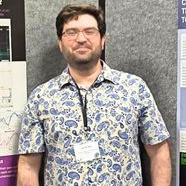
© David M. Weigl
David M. Weigl
David M. Weigl is a senior scientist at the Department of Music Acoustics – Wiener Klangstil at the mdw – University of Music and Performing Arts Vienna, where he conducts interdisciplinary research in cultural and social informatics with a focus on Digital Humanities. He was Principal Investigator on the project ‘Signature Sound Vienna’ (SSV), a digital musicology investigation into the Vienna Philharmonic Orchestra’s New Year’s Concert series, in which he co-developed software tools including the mei-friend editor for music encodings and the ‘Listen Here!’ environment for computer-assisted close listening. He currently leads ‘Vienna’s New Year’s Concerts: Same Procedure as Every Year?”, a science communication project building on the outputs of SSV; and ‘Let’s Encode!’, establishing a Citizen-Science platform for collaborative (crowd-)encoding and validation of music scores. All projects are funded by the FWF – Austrian Science Fund.
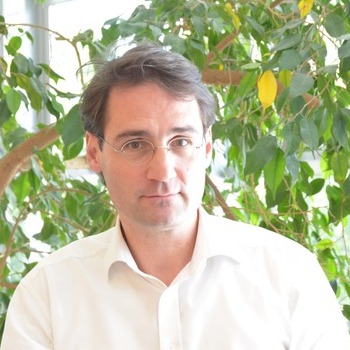
© Werner Goebl
Werner Goebl
Werner Goebl is Professor of Music Acoustics and Performance Science and head of the Department of Music Acoustics – Wiener Klangstil (IWK). He holds a PhD in Systematic Musicology of the University of Graz, and master degrees of the University of Vienna (musicology, psychology) and mdw (piano chamber music performance). With extensive research experience at the Austrian Research Institute for Artificial Intelligence Vienna, the Royal Institute of Technology Stockholm, McGill University Montreal, Johannes Kepler University Linz, he joined the faculty of mdw in 2009, where he obtained his venia on Music Acoustics in 2015. His recent work in music informatics and digital approaches to our cultural heritage include projects funded by the European Commission (“TROMPA – Towards Richer Online Music Public-domain Archives” 2018–21) and by the FWF (“Same procedure as every year? Quantifying the Signature Sound of the Vienna Philharmonic’s New Year’s Concerts” PI David M. Weigl). Together with David M. Weigl and Anna Plaksin, he is one of the core developers of mei-friend.