Program
2026 05 23
- mdw
- Anton-von-Webern-Platz 1, 1030 Wien
- Bankettsaal
- 09:00am – 10:00am
- paper session #9
- Chi-Wei Lin | Beyond Notation: Li-Yue , From Centralized Spectacle to a Community Model
- Alexandre Sasset-Blouin | Mutable Scores: Embracing Non-Finality in Notation
- details
Beyond Notation: Li-Yue , From Centralized Spectacle to a Community Model
Chi-Wei Lin | Independent artist-researcher, Paris, France
Ever since the dominance of score-centered composition in Western art music, musical organization has largely been understood as a process of pre-definition and centralized control. This paper proposes an alternative perspective by examining sound practices that operate through rule-based procedures, distributed agency, and collective coordination. Drawing on examples from Eastern Ritual-Music (Li-Yue) systems, and Lin Chiwei’s participatory sound modules, the study situates these practices within a broader historical and theoretical context that challenges linear notions of authorship, form, and musical intention. Rather than simply aestheticizing order, these modules explore whether decentralized, embodied protocols can generate new modes of social coordination. The work reimagines Yue not as a fixed representation, but as an evolving process—a generative system in which rhythm, error, and interaction together give rise to structure. Ultimately, It asks how we might sound together again— without being driven by an obsession with spectacle.
© Chi-Wei Lin
Chi-Wei Lin
Born in Taiwan in 1971, Lin Chi-Wei emerged as a key figure in East Asia’s experimental sound scene. Lin engaged in ethnographic fieldwork led by musicologist Lu ChuiKuan in TNUA between 1995–1996, focusing on Indigenous and Taoist musical traditions— He continued his academic pursuit at Le Fresnoy – Studio national des arts contemporains in France (2000), exploring new media and the politics of perception. His 2012 book “Beyond Sound Art: Avant-Gardism, Sound Machines, and the Modernity of Hearing” became a seminal text in the sinophone discourse on sound and media art.
linchiwei.comMutable Scores: Embracing Non-Finality in Notation
Alexandre Sasset-Blouin | Université de Montréeal
In Western art music, a work is commonly understood as a discrete and final entity, instantiated through a score or fixed instructions that govern its recreation. Although various practices experiment with a score’s determinacy, few musicians have envisioned a work’s notation as a continuously evolving and perpetual process. Drawing primarily on an analysis of Lydia Goehr’s work-concept, this paper first examines how works are largely perceived as finished entities. It then presents Lauren Redhead’s iterative compositional approach as a case study of scores deliberately designed to resist finality. Building on this framework, the paper introduces the mutable score through the examination of a composition currently in development. The proposed model supports perpetual adaptation, reworking, and recontextualization, treating iterations not as derivatives but as active components of an ongoing compositional process and traceable records of the work’s evolution. The paper further considers how such iterations may be documented, preserved, and circulated to remain operative in subsequent realizations.
© Jana Sokolova
Alexandre Sasset-Blouin
Alexandre Sasset-Blouin is a composer, sound artist, and researcher based in Tiohtià:ke (Montreal). His work spans performance and installation, investigating sound through material processes, feedback systems, and spatialized environments. He is pursuing a master’s degree in composition and sound creation at the Université de Montréal. His research focuses on the ontology of musical works in relation to scoring practices, approaching music and notation as perpetually ongoing processes. Aesthetically, he engages harsh and distorted sound generated through synthesis and extreme processing. He is a member of the performative notation research team at the Université de Montréal’s Laboratoire formes • ondes and participates in a Université du Québec à Montréal research-creation project on how sonic objects inform organizational routines. He is a student member of CIRMMT and the Hexagram network.
sasset.ca- 10:00am – 11:00am
- paper session #10
- Craig Pedersen | (re-)Defining the Poetic Text Score
- Nicolaj Kirisits | Sound as score in architectural plans: apath-based notation workflow using ambisonics + 360° video
- details
(re-)Defining the Poetic Text Score
Craig Pedersen | Cowan University
Text scores emerged within post-1960s Experimental music as the musical score’s definition expanded beyond the representation of foreseeable or reproducible musical outcomes. Using language in place of other notations, text scores employed indeterminacy and openness to establish an acceptable range of possible realisations. While instructional text scores—those that relatively clearly indicate musical action—have been widely discussed, their more ambiguous, non-instructional counterparts have received comparatively little attention. This paper addresses this gap by proposing a redefinition of such works as poetic text scores, framing them not by the absence of instruction but through their ambiguity and poetic function. Drawing on examples from Fluxus-associated artists, Pauline Oliveros, the Wandelweiser collective, and contemporary experimental practice, the paper surveys a range of poetic text scores, categorising them according to word use, spatial layout, and thematic qualities. Building on post-Saussurean structuralist semiotics, the paper advances a model of the score as an object signifying acts in time, with the act of interpretation arising to answer the questions “which acts, and when?” This framework is applied first to instructional text scores, before turning to Roman Jakobson’s theory of the poetic function to clarify and account for the poetic text score’s identity as score.
© Karol Orzechowski
Craig Pedersen
Craig Pedersen is a Canadian trumpet player, composer and improvisor living in Boorloo/Perth, Western Australia. He is constantly searching for expressive potentials, seeking a music that defies understanding and moves in unexplainable and unexpected ways. As an active and avid touring artist, he has played across Canada, in Asia, Australia, America and Mexico. Highlights of his work includes collaborations and/or performances with Toshimaru Nakamura, Tetuzi Akiyama, Godspeed You! Black Emperor, Shinkan Tamaki, Manfred Werder, Pauline Oliveros, Roscoe Mitchell, Jean Derome, Joane Hetu, Anne-F Jacques, and many others. His book Trumpet Sound Effects was published in 2014 by Berklee Press, and his in-progress PhD is centred upon the interpretation of poetic text scores, soliciting input from Manfred Werder, Ryoko Akama, Heather Roche, Julián Galay, Gudinni Cortina, E Millar, Zhao Cong and Zhu Wenbo, Mark Molnar, Sage Harlow and many others.
Sound as score in architectural plans: apath-based notation workflow using ambisonics + 360° video
DI Nicolaj Kirisits | University of applied arts Vienna Institute, fine arts & media art, Department digital arts
Architecture is experienced in physical space but is represented as a non-temporal object in 2D plans, whereas sound is framed as a temporal phenomenon in the time– frequency domain. Bridging this divide requires conceiving architecture as event and sound as a spatial, architectural element. We propose a plan-centric notation that “folds” listening events along a walked path into the plan for re-enactment, comparison, and design discussion. Building on the Soundspace-Sequenz—an improvisational listening walk documented for later analysis—our method combines first-order Ambisonics (FOA) audio with 360° video. Python-based processing extracts descriptors (amplitude envelope, spectral complexity, tonal segments, onsets) and maps time to walked distance using video- assisted position checks. The resulting path-line is registered to the route and embedded in the plan; interpretive icon annotations (atmospheres, sound effects, soundmarks) are added manually under an explicit rule set. A case study in an urban public space shows how the plan- embedded score functions as a memory-stable record of listening and an actionable artifact for communicating sonic design concerns. Unlike static sound maps that merely locate sound, the notation documents listener– space interaction as constitutive of sonic reception.
© Nicolaj Kirisits
Nicolaj Kirisits
Nicolaj Kirisits (*1967, Vienna) is an Austrian architect and sound artist. He studied architecture at the Vienna University of Technology and electronic and experimental music at the University of Music and Performing Arts Vienna. Since 2019 he has been working on his PhD project, Notation of Soundscapes: How to Think Architecture Sonically, at the Vienna University of Technology. Since 2003 he has been a Senior Artist at the University of Applied Arts Vienna (Institute of Visual and Media Arts, Department of Digital Art), where he leads the SoundArtLab, focusing on sound in space and time-based media installations. His interactive sound installations have been presented internationally at festivals such as Ars Electronica (AT), SIGGRAPH (USA), FILE Festival (BRA), NIME (FR), NTTICC Tokyo (JP) and the Bienal de La Habana (CUB).
- 11:00am – 12:00pm
- paper session #11
- Eric Maestri | Sonic Scores Mimetic Behaviour: Two Case Studies
- Gil Dori | Songs of Love and Death: The Act of Sound as Notation
- details
Sonic Scores Mimetic Behaviour: Two Case Studies
Eric Maestri | Sorbonne Université, Institut de recherche en musicologie (IReMus)
In this paper, I point out questions that have arisen from my practice of sonic scores. This music writing is based on sound. A sonic score is an aural notation that encodes, in a phonographic manner, a musical work in a sound file. By doing so, it places the sonic experience at the heart of musical notation. However, this approach also presents challenges and benefits in musical projects. Sonic scores expand and enhance the musical creativity of performers by freeing them from graphocentric approaches. They present musical pieces in a radically different way, offering an alternative perspective on notation and composition. Sonic scores can be used to coordinate musicians and provide a tangible experience with extended instrumental techniques in mixed music. In this paper, I will study the mimetic approach to the performance of sonic scores. I will examine the historical evolution of sonic scores and present an initial analysis of data collected during two sessions of performances of two sonic scores: Metaction and C’est de l’encre. I will use this experience to make a preliminary evaluation. The goal of this research is to understand the suggested conveyance mode of the proposed sonic scores and to consider them in a broader context.
© Deborah Lopatin
Eric Maestri
Eric Maestri is composer and musicologist, Associate professor in contemporary music at Sorbonne University, Paris. He has composed for international groups and festivals and has published extensively about electronic and 21st-century music.
ericmaestri.euSongs of Love and Death: The Act of Sound as Notation
Gil Dori | ENTI-UB
Songs of Love and Death is a composition for voice and electronics, which revolves around vowel sounds - real and implied. It features a real-time graphic score, which uses mouth contour data to recreate the shapes of vowels on the screen. Although they are represented graphically, these recreated vowels imply the sound that is tied to each one of them. The performer sings the text, imitating the given vowel shapes, and thus reshaping the sounds of the sung text. Through that, the work explores unusual acoustic results that emerge from the contrast between the implied vowel sound and the text needed to be sung. This approach to action-based notation incorporates aspects of audio scores into a visual one. The paper describes the composition and performance of Songs of Love and Death, discussing this notion of implied sounds, or acts of sound, as the driving principle of the notation.
© Gil Dori
Gil Dori
Gil Dori is a composer, teacher, and co-founder of EyeHarp – the first accessible musical instrument that is played with the eyes. Gil teaches music technology, sound design, and composition at the College of New Interactive Technologies, University of Barcelona. As an artist and researcher, Gil is mostly interested in interactive electronic music, alternative notation, spectral procedures, and Jewish music. He holds a Doctor of Musical Arts degree from Arizona State University
gildori.com- 12:00pm – 01:30pm
- workshop #6 (Room D0263) and #7 (Room A0201) in parallel
- Susanne Kogler, Nicolas Müller-Lorenz, Elisabeth Schimana and Barbara Neu #6 | You are the Sound // A Workshop on Listening and Mimesis
- Giuseppe Silvi #7 | Inhabiting Vibration: Electromagnetic Feedback and Tetrahedral Thinking
- details
You are the Sound // A Workshop on Listening and Mimesis
Univ. Prof. Mag. Dr. Susanne Kogler and Nicolas Müller-Lorenz, BA | University of Graz (KFU) / Department of Arts and Musicology
Guests: Arnie Cox, Luc Döbereiner, Barbara Neu, Elisabeth Schimana
You are the Sound addresses the aesthetic experience of how audio scores are being perceived and understood by everyone involved during a performance. The main question we aim to discuss in a philosophically and aesthetically enriched debate is how the sensual, cognitive and corporeal experience of listening to a piece of music in a certain setting affects understanding, individual feelings and behaviour of all those involved. The questions raised do not only concern musicians, composers, and performers, but also the audience. Two live performed examples by Elisabeth Schimana with Barbara Neu and Luc Döbereiner will serve as a base for a following discussion together with experts from different fields such as music aesthetics and journalism. Theoretically, the concept of mimesis is the point of departure for the discussion. Mimesis, as we understand it, does not only mean imitation, but rather a creative action including corporeal experience, communication and critical reflection.
Inhabiting Vibration: Electromagnetic Feedback and Tetrahedral Thinking
Giuseppe Silvi
This workshop examines the electroacoustic augmentation of traditional musical instruments as an epistemic practice through direct engagement with Tempo (Timpani Electro-Magnetic Pulse Oscillation), an instrument that generates sound via electromagnetic fields without physical contact. The membrane is set into vibration through magnetic induction from wearable devices, while a tetrahedral microphone array (TetraREC) captures signals that become the vibrating membrane itself, forming a recursive feedback loop in which gesture is equated with sound. First, participants directly experience the instrument’s material behaviour by sensing magnetic fields, exploring how position influences timbre, and inhabiting vibration through focused listening. Second, participants engage with cartographic notation developed through systematic membrane cataloguing, technical possibilities into a navigable musical itinerary. Third, participants interpret scored passages, encountering the instrument’s topology as a performable territory.
© Marco Iacobucci
Giuseppe Silvi
Giuseppe Silvi is a professor of Electroacoustics at the Conservatory “N. Piccinni” of Bari and a doctoral researcher in Artistic Research in Music at the Conservatory “A. Casella” of L’Aquila. He studied Electronic Music at the Conservatory “S. Cecilia” in Rome with Giorgio Nottoli, Nicola Bernardini, and Michelangelo Lupone, and completed advanced studies with Alvise Vidolin (Ac-cademia Chigiana) and Michelangelo Lupone (Accademia Santa Cecilia). His research centres on the development of invented electroacoustic systems, including S.T.ONE, a tetrahedral omnidirectional loudspeaker, and Tempo (Timpani Electro-Magnetic Pulse Oscillation), a feedback-augmented timpani. He is the founder of LEAP (Laboratorio ElettroAcustico Permanente) in Rome and of the SEAM (Sustained ElectroAcoustic Music) project, dedicated to the interpretation of electroacoustic repertoire with particular attention to the Roman School tradition.
break
- Bankettsaal
- 02:00pm – 03:00pm
- paper session #12
- Per Anders Nilsson and Palle Dahlstedt | Interactive Scores: Tasks and decisions in improvisation systems and open works
- Grgur Savic | Visual Scores as Listening-Mediated Notation: A Practic-Based Case Study
- details
Interactive Scores: Tasks and decisions in improvisation systems and open works
Per Anders Nilsson and Palle Dahlstedt | Academy of Music and Drama, University of Gothenburg
This study investigates relationships and interactions between a performer and a score. This view implies a shift in focus, from the score to the act of interpreting and performing, and subsequently to the performer. A significant aesthetic conception is to regard the score as an artifact intended for players to interact with, rather than a means for personal expression per se. The musical context is first and foremost within the experimental music tradition in the post-World War II era. The theoretical framework consists of concepts from, e.g., John Cage and Cornelis Cardew, in addition to influences from the field of interaction design. To elucidate the subject matter, a limited number of musical works are discussed, including both classic pieces and original works. Finally, the paper concludes with some personal reflections on working with interactive scores.

© Per Anders Nilsson
Per Anders Nilsson
Per Anders Nilsson (1954) Professor Emeritus at the University of Gothenburg. Researcher, improvisor and composer. Studied saxophone and electronic music in the 80s at the University of Gothenburg. PhD at the University of Gothenburg 2011. Been a visiting scholar at UC Berkeley and Stanford University, selected in ICMC conferences and international music festivals. Nilsson works in the research project Entangled Musicianship, supported by the Swedish Research Council. Nilsson plays in several improvisation groups.

© Palle Dahlstedt
Palle Dahlstedt
Palle Dahlstedt (1971) Composer, sound artist, improviser and researcher. Has a PhD (Chalmers, 2004) in creative AI for composition and sound design. His research interest is the deep entanglement of art and advanced technology, developing new technologies for improvisation, composition and art. Head of subject in music and lecturer in composition at the Academy of Music and Drama (University of Gothenburg), Prof. of Interaction Design, Dept. of Computer Sci. and Eng., (Univ. of Gothenburg and Chalmers). Also Adjunct Prof. of Art & Technology, Aalborg University.
Visual Scores as Listening-Mediated Notation: A Practic-Based Case Study
Grgur Savić | Independent Researcher
This paper presents a practice-based analysis of a time-based visual score, accompanied by extensive performance notes specifying symbol execution. The digitally animated notation employs relational, temporal, and gestural cues organized along a moving horizontal timeline, regulating entrances, transitions, and pauses without prescribing fixed pitches or durations. Performers translate visual information into sound through attentive listening and ensemble negotiation. The study examines how this approach fosters interpretive flexibility, coordination, and collective awareness, highlighting complementary perspectives to audio-centric notation. Pedagogical implications are discussed, illustrating how visual scores can support rehearsal, performance, and ensemble training while foregrounding listening, collaboration, and interpretive responsibility.
© Sanja Star
Grgur Savić
Grgur Savić works across the mediums of sound, visual art, and technology. His practice spans performance, composition, and material transformation, with a focus on deconstructing the saxophone to explore resonance, vibration, and the tangible presence of sound. Working with graphic scores, he investigates visual–sonic translation and real-time interaction, as in his project [air>coded], which stages a dialogue between human fragility and digital precision, questioning authorship, perception, and agency: Who leads, and who listens? His intermedial practice transforms found objects and discarded texts into hybrid sound–text works, reflecting on communication, authorship, and the social dimensions of art. Across formats, his work listens for how sound, text, and objects can be coded, re-coded, and ultimately re-heard. His work has been featured at international experimental music festivals. Based in Berlin since 2015, he is an active member in the Echtzeitmusik scene.
- 03:00pm – 04:00pm
- paper session #13
- Djordje Marković | Prescriptive Notation as Performative Interface
- James Aylward | Playing the Action, Hearing the Result: Prescriptive Notation and Bassoon Technique in Aaron Cassidy's 25 April '05
- details
Prescriptive Notation as Performative Interface
Djordje Marković | PhD student, Academy of Arts, University of Novi Sad, Serbia
This paper approaches musical notation not as a representational system for sound, but as a prescriptive interface that organizes instrumental action and conditions the emergence of musical events. Drawing on the performative turn in music, improvisation studies, and Gilles Deleuze’s concept of virtuality, it argues that increased prescriptivity often intensifies rather than reduces interpretative openness. By examining prescriptive layers embedded within classical notation – such as articulation, ornamentation, and instrumental instructions – the paper challenges the opposition between descriptive and prescriptive notation. Prescriptivity is understood as operating below the level of sound, at the level of embodied action, allowing sonic outcomes to remain contingent and immanent to performance. The argument is grounded in the author’s compositional practice, with examples from trumpet notation that employ minimally extended classical notation to prescribe complex actions while resisting stable sonic representation. The paper concludes by proposing prescriptive notation as a catalyst for musical becoming rather than a blueprint for musical objects.
© Djordje Marković
Djordje Marković
Djordje Marković is a composer, researcher, and Teaching Assistant at the Academy of Arts in Novi Sad, where he is comple?ng his doctoral studies (DMA). His work explores composi?on, phenomenology, and the ontology of musical nota?on. He studied composi?on and philosophy, and pursued postgraduate studies with Beat Furrer at KUG Graz. His music has been performed interna?onally by ensembles such as Klangforum Wien and London SinfonieOa, and presented at fes?vals including impuls (Graz) and Rainy Days (Luxembourg).
Playing the Action, Hearing the Result:
Prescriptive Notation and Bassoon Technique in Aaron Cassidy's 25 April '05
James Aylward | Edith Cowan University
The expansion of extended instrumental techniques has increasingly exposed the limitations of traditional Western musical notation, particularly its prioritization of pitch and rhythm over timbre, physical action, and performance process. This paper examines these limitations through a case study of Aaron Cassidy’s bassoon solo 25 April ’05 (2025), focusing on the composer’s use of a highly prescriptive tablature-based notational system. Drawing on Charles Seeger’s distinction between descriptive and prescriptive notation, as well as subsequent discourse on mixed notational systems, the article situates Cassidy’s work within broader debates surrounding the communication of instrumental technique. Cassidy’s score separates the activities of the breath apparatus and the fingers across two staves, employing graphical notation, colour-coding, and tablature to prioritize physical and choreographic action over fixed sonic outcomes. Through detailed analysis of this system, the paper argues that Cassidy’s notation creates a sophisticated method of communication that actively engages the performer while creating conditions for instability and variability. The notation stimulates the exploration of transitive and unpredictable sounds intrinsic to the bassoon. While acknowledging the practical challenges posed by such a system, the article suggests that 25 April ’05 offers a compelling model for rethinking notation as a generative framework, expanding contemporary approaches to instrumental technique and composer–performer interaction.
© James Aylward
James Aylward
(b. 1979) is a Netherlands-based bassoonist known particularly for his dedicated engagement with contemporary music. He has performed regularly with leading new music ensembles including Ensemble Musikfabrik and Elision Ensemble and has appeared in numerous international concerts and festivals. His other collaborations include performances with Ensemble Modern, Klangforum Wien, Ensemble Mosaik, Remix Ensemble, a.o. Since October 2025, James is Professor of Bassoon at the Prins Claus Conservatorium in Groningen. He is also completing a PhD at Edith Cowan University, focusing on alternative approaches to extended techniques. His earlier research into microtonality in bassoon repertoire was undertaken during his Master’s studies at the Conservatorium van Amsterdam (2007). From 2001 to 2005, he was Associate Principal Bassoon of the West Australian Symphony Orchestra (WASO), and he remains an active guest performer with orchestras across the Netherlands and Europe.
- 04:00pm – 05:30pm
- workshop #8 (Room A0201) and #9 (Room D0263) in parallel
- Sandeep Bhagwati #8 | Performing an Audioscore for (Un)trained Singers
- Sonia Allori #9 | Live Descriptive Captioning as Musical Notation in Improvised Performance
- details
Performing an Audioscore for (Un)trained Singers
Singing Like a Bird
This workshop introduces an instruction-based vocal practice derived from my work Villanelles de Voyelles, adapted here in a non-generative, non-algorithmic form. Participants explore how voices can behave like birds—not through imitation of birdsong, but through calling, repetition, listening, and spatial emergence. Using fixed spoken instructions and fixed audio media, participants engage in simple vocal situations based on vowels, breath, and attention. The workshop emphasizes mobility, listening-led action, and collective sonic ecology. No prior singing experience or musical training is required. Each active participant must bring a cellphone and headphones.
Live Descriptive Captioning as Musical Notation in Improvised Performance
Sonia Allori
This workshop explores live descriptive captioning as a form of real-time musical notation in improvised performance. Rather than serving as accessibility support or documentation, captions are treated as a parallel, score-like layer that unfolds alongside sound, shaping listening and interpretation in the moment. The session combines video examples, discussion, and a live improvisation between a musician and a captioner, demonstrating how language can respond to musical elements such as texture, timing, and affect. It also includes a part where the audience can join in, offering direct insight into the interpretive and temporal decisions involved. The workshop invites participants to consider how notation can emerge from sound, rather than precede it. Grounded in Deaf-led practice, the workshop positions captioning as a creative and compositional method, contributing to expanded ideas of notation, listening, and pedagogy in line with the TENOR 2026 theme Sound as Score.
© Julian Maunder
Sonia Allori
Sonia Allori is a Scottish-Italian composer, performer, researcher and music therapist based in the Scottish Highlands. Her work explores access-led composition, integrating creative captioning, British Sign Language (BSL), and multi-sensory approaches as core artistic material, often shaped by curiosity, everyday interactions, humour, and place. She is currently completing research at the Royal Conservatoire of Scotland. A member of the inclusive ensemble Sonic Bothy, she is also an artist on both the Sound and Music In Motion Programme (2025/26) and the PRS Keychange programme (2026). Recent commissions include The Focus Group: A Deaf Musical, Adventures in Captioning, and The Goddess of Ballachulish.
break
- Josef Haydn-Saal
- 06:00pm – 07:00pm
- keynote
- Arnie Cox | On the roles of mimetic motor imagery and action in musical composition, performance, consumption, and aesthetic evaluation
- details
break
- 07:30pm – 08:15pm
- concert
- Ann Rosén | Between Us
- Solomiya Moroz | Rhizomes
- Lindsay Vickery | Little (Grey) Wing
- Cat Hope | Vibrissae - For violin, double bass and electronics
- performed by black page orchestra
- details
Between Us
Ann Rosén | performed by black page orchestra
Between Us is a work for electronics and acoustic instruments (strings, winds, piano, percussion, or chosen instrumentation). The piece explores the present moment—how it is experienced, and how it is shaped through listening, attention, and interaction between performers. Sound is used not only as musical material but as an audio score for the performers, where listening becomes a form of reading and interpretation. The work unfolds in real time, with the score presented on screens that musicians follow as it appears. Performers are asked to select and remember fragments of material, later reinterpreting them from memory, creating a shifting relationship between immediacy, memory, and collective awareness. The work is grounded in an idea of shared presence: a space where sound, action, and listening continuously inform each other in the unfolding of the moment.
© Ann Rosén
Ann Rosén
Sound artist and composer. Ann Rosén's music and sound art have been performed at, among others, The Royal Academy of Fine Arts, the Swedish Royal Opera, Moderna Museet Stockholm, South Bank London, Huddersfield Contemporary Music Festival UK. She has played at clubs and festivals and shown her art at galleries and museums in Sweden and internationally. Rosén's artistry include works for various ensembles, choreographic works, spatial designs, sound art, choral works, sound installations, video, sculpted silences, performances and experimental new music. She describes her artistic process 1981-2023 through a graphic score published in the book “Recycling the Work Process” (2023). In her ongoing project “Drawing Session” Ann Rosén has created a series of works where pencil drawing is the instrument itself. The lines turn int
Rhizomes
For clarinet (Bb), trombone, piano, percussion, violin, cello
Solomiya Moroz | performed by black page orchestra
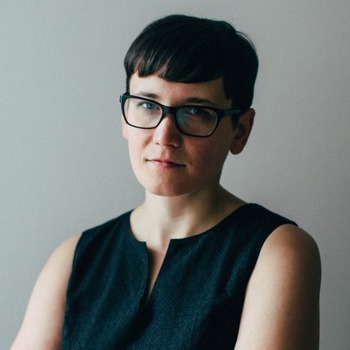
Rhizomes is a performance for an ensemble of a musical score co-composed with plants in real time. The piece is based on a plant bio-feedback device for live score generation, developed as part of a chamber opera project. In collaboration with Nicolo Merendino and Massimo Sterlino, I developed a custom IoT sensor array that measures electrical activity (analogous to ECG), light exposure, and humidity. This data is transmitted to a real-time music software environment. Unlike commercial applications focused on ambient sound, this work treats plants as active compositional collaborators. By translating biophysical fluctuations into dynamic pitch and structural data, the system positions plants as living score generators within a feedback loop: musicians interpret and respond to their signals, and the plants react in turn. This approach challenges traditional hierarchies in human-environment interaction, fostering a relational, interdependent creative process. The work is structured around seven movements representing possible habitual states of the plant world, with some hinting at a lack of care and degradation akin to ecological disasters. Light / Darkness / Infestation / Cuts / Windy weather / Draughts / Flooding.
© Solomiya Moroz
Solomiya Moroz
Solomiya Moroz is a Ukrainian-Canadian composer, performer, and researcher whose work explores the intersections of acoustic, electronic, and interdisciplinary practices. With a PhD in Music Composition from the University of Huddersfield and a Master’s in Live Electronics from the Conservatoire of Amsterdam, her creative practice interrogates the evolving roles of musicians, embodied performance, and technology in contemporary music. Her compositions, ranging from chamber works to multimedia collaborations, have been featured at major festivals. An active performer on flute and electronics, Moroz has presented interdisciplinary work collaborating with dancers, visual artists, and experimental musicians. Her research investigates gestural composition, AI co-creation, and digital notation. Moroz’s work bridges artistic innovation and scholarly inquiry, advocating for expanded notation, collaborative creativity, and accessible music-making.
solomiyamoroz.comLittle (Grey) Wing (2021)
for four instruments
Lindsay Vickery | performed by black page orchestra
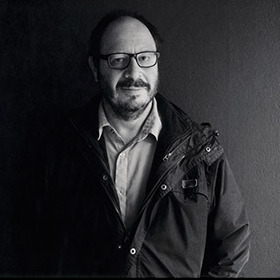
little (Grey) wing is a hybrid Audio Score/Scrolling score in which the performers emulate sounds they can hear on headphones as precisely as possible with the assistance of a synchronised scrolling score representation of what they are hearing. The audio component is a sonic collage of 187 short fragments of “studio banter”, false starts, exclamations and doodling from 21 diCerent tracks by the Jimi Hendrix Experience. The samples are densely distributed, into moments of stability, interruption, exploration and oC-kilter loops. The same audio component is presented to all of the performers, but the components they individually emulate are “orchestrated” in the score, so that the performance retains much of the energy and shape of the original fragments, but ideally has an “uncanny valley” quality for the audience. The title is a nod to both Hendrix – Little Wing (1967) and the ensemble that premiered the work, GreyWing.
© Lindsay Vickery
Lindsay Vickery
Lindsay Vickery is a composer, performer and researcher, and a founder member of New Music ensembles Decibel, GreyWing, HEDKIKR and Magnetic Pig. His work explores relationships between score presentation and musical structure, and between electronic/acoustic, composed/interactive and improvisational practices, with a particular focus on coordinating live performers and electronics. His music spans solo works to opera, in interactive, improvised and notated contexts, and has been commissioned for concert, dance and theatre. He is an active international collaborator and has performed at SWR Tage für Neue Musik, Huddersfield Contemporary Music Festival, Dark Music Days, Audio Art, Tokyo Wondersite, Café Oto and The Knitting Factory and others. Vickery is part of the team that developed the Decibel Scoreplayer, and coordinates Composition and Sonic Arts at WAAPA, Edith Cowan University.
Vibrissae - For violin, double bass and electronics
Cat Hope | performed by black page orchestra
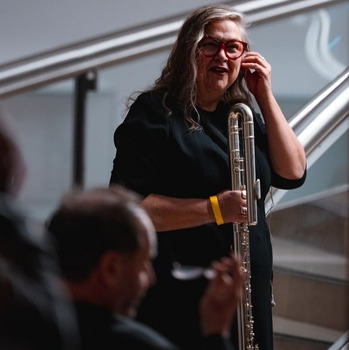
This piece is inspired by the sounds and sensitivities of Weddell’s seals, the southernmost dwelling mammals, who live in Antarctica.The vibrissae (whiskers) of the seals sense vibrations in the water, enabling them to track prey. Their calls can feature long, downward glissandi, squeals, knocking and high-pitched tones - not unlike the sounds produced by strings instruments, at other times quite similar to modular electronic music synthesis. The performers prepare by listening to recordings of seal calls selected and provided by the composer, to inform their reading of a graphic score, The fixed media track was created by the composer, using the same approach, and was made at EMS Stockholm in 2025,on the Vintage Buchla 200 Synthesiser. The work was commissioned by Anna McMicheal, and is read using the Decibel ScorePlayer.
© Cat Hope
Cat Hope
Cat Hope is an award winning Australian composer who focuses on the extremes of sound – from extreme noise to barely audible delicacy. Her works have been performed worldwide by ensembles such as Yarn Wire (US), Hanatsu Miror (Fr), the BBC Scottish Symphony (UK), KNM (DE) and Norbotten Neo (Sweden). Recordings of her works are published internationally on labels such as Hat (Hut) Art, with her monograph CD Ephemeral Rivers winning the German Critics Prize in 2017. Her music has been discussed in books such as Score Writing (Thor Magnusson, 2019) and Hidden Alliances (Schimana, 2019), as well as periodicals such as The Wire (UK), Revue & Corrigée (FR), Neu Zeitschrift Für Musik (DE) and Gramophone (UK), who named her “one of Australia’s most exciting and individual creative voices.” She is director of Decibel new music ensemble, and Professor of music at Monash University, Melbourne, Australia.
cathope.com08:30pm – open end TENOR dinner
- Fri 09:00am – Sun 02:00pm
- poster exhibition foyer Klangtheater
- Veronika Reutz Drobnić | Visual Complexity and Cognitive Load in Animated Graphic Scores: Evidence from Biometric and Performance Data
- Andres Gutierrez Martinez and Chiara Percivati | Timbre as score. A machine-listening instrument for HCI performance of bass clarinet multiphonics.
- Claire Paul | Toward a Psychoacoustic System of Graphic and Performance Scores: Improvisation, Healing Frequencies, and Embodied Sound
- David M. Weigl and Werner Goebl | Machine-readable representations of music notation as digital music research infrastructure
- details
Visual Complexity and Cognitive Load in Animated Graphic Scores:
Evidence from Biometric and Performance Data
Veronika Reutz Drobnić
This poster presents an empirical study of performer stress and interpretive strategy in the reading of scrolling graphic notation. Using physiological measures, questionnaires, interviews, and performance data, the project examines how visual parameters such as symbol density, overlap, and spatial complexity influence musicians’ responses and shape their real-time interpretive processes. The findings suggest that performers do not passively decode graphic scores, but actively construct translation systems that balance perceptual, bodily, and musical constraints. The poster contributes to current discourse on graphic notation by framing performance as a situated process of negotiation, adaptation, and meaning-making.

© Veronika Reutz Drobnić
Veronika Reutz Drobnić
Veronika Reutz Drobnić is a composer and published researcher of new music, acclaimed for her innovative work with non-traditional, visual, and folk-based materials. Her research examines neurocognitive and perceptual processes in performing graphic and animated scores, bridging music composition, cognitive neuroscience, and visual arts. Her award-winning music has been performed worldwide and featured on TV and radio in Germany, Croatia, and Japan. She studied at the Music Academy Zagreb, HDMK Stuttgart, HfM Karlsruhe, and Kunitachi College of Music, Japan. Currently a PhD candidate at HfM Karlsruhe and ZHdK Zürich, on Erasmus at KMH Stockholm, she has collaborated with renowned ensembles including SWR Symphony Orchestra and Badische Staatskapelle. A recipient of major grants (Cusanuswerk, BW,ZONTA, PROMOS), Veronika’s ballet Black Puzzle ~ Still, I Rise is in the repertoire of the Croatian National Theatre.
Timbre as score.
A machine-listening instrument for HCI performance of bass clarinet multiphonics.
Andres Gutierrez Martinez and Chiara Percivati
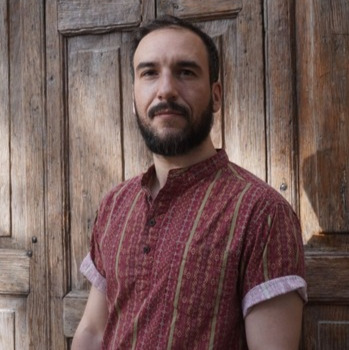
This project presents a curated collection of bass clarinet multiphonics drawn from existing literature and the authors’ artistic practice. It combines controlled recordings, audio analysis, and visualisation to examine their spectral, temporal, and perceptual qualities. Using FluCoMa and SuperCollider, the multiphonics are analysed through a set of timbral descriptors and mapped into interactive 2D visualisations that provide practical performance information such as fingerings and available partials. In a second phase, these visualisations are used as exploratory maps based on timbral similarity and contrast, fingering proximity, and performance effort. Subsequently, drawing on the recorded corpus, a machine-listening instrument was developed that matches the timbral attributes of incoming sounds with the dataset for live interaction via concatenative synthesis. The project introduces multimodal exploration combining visual representations with timbre based interaction.
© Andrés Gutiérrez Martínez
Andrés Gutiérrez Martínez
Andrés Gutiérrez Martínez is a composer and electronic music performer whose recent work is informed by the perceptual study of timbre and its role in contemporary music. He has a PhD in music composition from the University of California San Diego and was a postdoctoral fellow at the Music Perception and Cognition Lab, working under the direction of Stephen McAdams at McGill University from 2022 to 2025. Gutierrez Martinez is currently Professor for Electroacoustic Composition at the Gustav Mahler Privatuniversität für Musik in Klagenfurt, Austria.
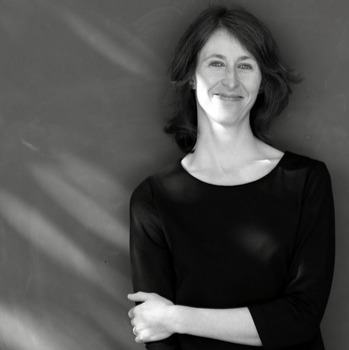
© Tiange Zhou
Chiara Percivati
Chiara Percivati is a clarinettist, performer, and researcher. Her artistic work and research focus on exploring, questioning, and expanding the symbiotic relationship between performer and instrument. She conducts research in the field of instrument preparation and augmentation as a PhD candidate at the Orpheus Institute and the University of Antwerp, and as a researcher at the Royal Conservatoire Antwerp.
Toward a Psychoacoustic System of Graphic and Performance Scores:
Improvisation, Healing Frequencies, and Embodied Sound
Claire Paul
This project presents a flexible system of graphic and performance scores designed to support improvisation through psychoacoustic awareness and embodied listening, inspired by trauma-informed practice as composition. Rather than prescribing fixed musical outcomes, the scores function as visual prompts that guide performers’ attention to resonance, vibration, spatial interaction, and perceptual experience. Drawing on concepts such as involuntary musical imagery (IMI), perception, anamnesis, and phonomnesis, the system emphasizes memory, recursion, and cross-sensory interpretation as generative forces in sound-making. Sustained frequencies, beating patterns, and timbral shifts are treated as primary materials, encouraging gradual transformation and deep listening. The approach is instrument-agnostic and adaptable to acoustic, electronic, and hybrid contexts. By framing sound as relational and spatially dynamic, this work contributes a perceptually oriented model of notation that foregrounds presence, intuition, and the embodied experience of sound.

© Claire Paul
Claire Paul
Claire Paul is an interdisciplinary artist exploring performance, sound, and visual process. She holds an MFA in Drawing and Painting from Georgia State University (2009) and a BME in Music from Florida State University (1999). A bassoonist under Jeff Keesecker, Paul has developed experimental approaches to electronic bassoon performance and has presented guest masterclasses at Florida State University in 2015 and 2025. Included in the publication A Year of Deep Listening: 365 Text Scores for Pauline Oliveros by The Center for Deep Listening. Recent projects include a solo improv performance at Spruill Gallery (2025), exhibitions at ATHICA: Athens Institute for Contemporary Art and the Atlanta Contemporary (2024), Mysterium at University of Georgia (2023), with Yusuf Ali at Blue Heron Nature Preserve (2022). In 2017 at the Atlantic Center for the Arts with Zeena Parkins and Jennifer Monson. The SEAS International Art Exhibition and Ionion Center Art Exhibition in Greece (2016)
Machine-readable representations of music notation as
digital music research infrastructure
David M. Weigl and Werner Goebl
MEI, the XML-based format developed by the Music Encoding Initiative, a community of music scholars, librarians, and technologists, explicitly encodes musical semantics of different traditions alongside common music notation, including neumes, mensural notation, or tabulatures. By explicitly encoding musical semantics, it enables advanced computational analysis and support the development of interactive digital tools for musicological research, rehearsal, and performance. The browser-based editor mei-friend, served at mei-friend.mdw.ac.at, facilitates access to these encodings by allowing users to import multiple formats into the standardized MEI framework. To support our digital musicology research activities as part of the ‘Signature Sound Vienna’ project, we have developed this editor in coordination with other scholarly tools, including ‘Listen Here!’ listen-here.mdw.ac.at, a Web application for computer-assisted close-listening and annotation of collections of performance recordings, and ‘Primal’ primal.mdw.ac.at, a tool for the dissemination of annotated digital evidence objects for music scholarship.
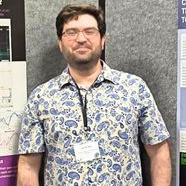
© David M. Weigl
David M. Weigl
David M. Weigl is a senior scientist at the Department of Music Acoustics – Wiener Klangstil at the mdw – University of Music and Performing Arts Vienna, where he conducts interdisciplinary research in cultural and social informatics with a focus on Digital Humanities. He was Principal Investigator on the project ‘Signature Sound Vienna’ (SSV), a digital musicology investigation into the Vienna Philharmonic Orchestra’s New Year’s Concert series, in which he co-developed software tools including the mei-friend editor for music encodings and the ‘Listen Here!’ environment for computer-assisted close listening. He currently leads ‘Vienna’s New Year’s Concerts: Same Procedure as Every Year?”, a science communication project building on the outputs of SSV; and ‘Let’s Encode!’, establishing a Citizen-Science platform for collaborative (crowd-)encoding and validation of music scores. All projects are funded by the FWF – Austrian Science Fund.
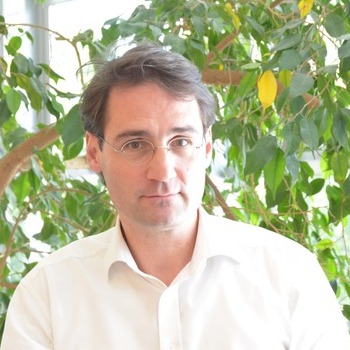
© Werner Goebl
Werner Goebl
Werner Goebl is Professor of Music Acoustics and Performance Science and head of the Department of Music Acoustics – Wiener Klangstil (IWK). He holds a PhD in Systematic Musicology of the University of Graz, and master degrees of the University of Vienna (musicology, psychology) and mdw (piano chamber music performance). With extensive research experience at the Austrian Research Institute for Artificial Intelligence Vienna, the Royal Institute of Technology Stockholm, McGill University Montreal, Johannes Kepler University Linz, he joined the faculty of mdw in 2009, where he obtained his venia on Music Acoustics in 2015. His recent work in music informatics and digital approaches to our cultural heritage include projects funded by the European Commission (“TROMPA – Towards Richer Online Music Public-domain Archives” 2018–21) and by the FWF (“Same procedure as every year? Quantifying the Signature Sound of the Vienna Philharmonic’s New Year’s Concerts” PI David M. Weigl). Together with David M. Weigl and Anna Plaksin, he is one of the core developers of mei-friend.